

Have you published a bunch of blog posts that get a little bit of attention and then fizzle out?
If you’ve seen your blogs drive some traffic one moment, and the next day, you’re not even showing up on the search engine results pages, you’re about to discover the reason.
In this article, you’ll understand what content cluster models mean, the reason why they work better than isolated posts, and the type of models that drive results in B2B. And even more.
So, as you’re reading this, if you’re scratching your head and asking these questions:
- Why do you get these tiny bursts of traffic?
- Why do the leads seem so random?
- And why can you never seem to establish any real authority?
Note that these are the exact problems content clusters are designed to solve, especially in B2B marketing.
That said, many businesses consider content clusters to be just a trendy buzzword or concept. But in reality, clustering is all about how search engines actually understand what you’re writing about and how B2B buyers do their research and decide on a product or service.
Let’s start with a critical question:
What on earth is a content cluster in B2B?
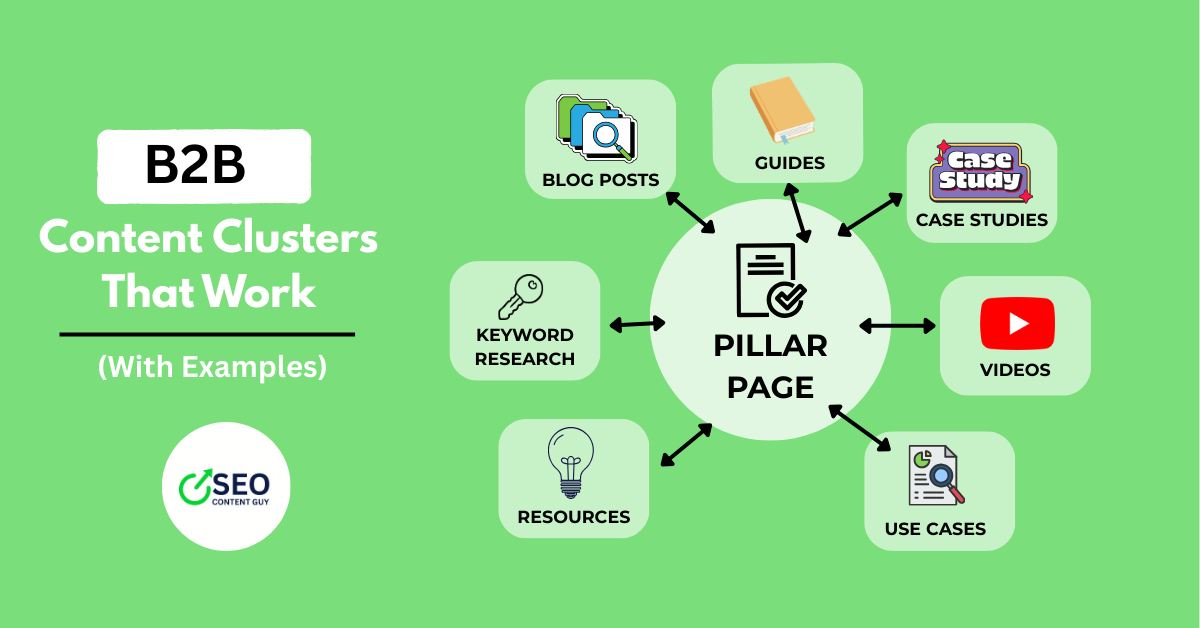
A content cluster is a bunch of related pages tied together and focused on a main subject. While each page addresses this subject from a different angle, all make it easy for people to navigate around quality resources.
At the centre of it all is a main page, often known as the pillar page. This is the page that everything else centres around. You then have supporting pages that dive deeper into the specific areas of the main topic.
You can think of it like a table of contents and all your individual chapters. Rather than writing ten disconnected blog posts over the course of a year, build a content cluster that strengthens your information hub with every new post.
Why does this matter? Well, search engines don’t just look at individual pages anymore. They evaluate the whole picture of what you’re offering.
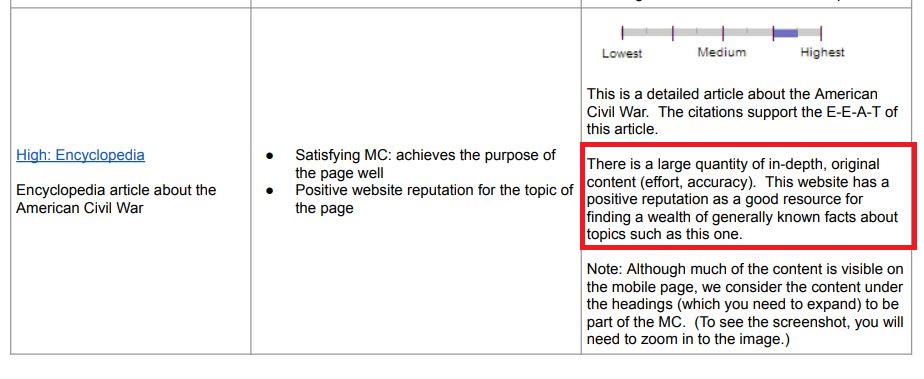
According to Google’s Search Quality Evaluator Guidelines, good sites usually demonstrate a depth of knowledge, a breadth of knowledge, and consistency when it comes to the subject matter. And that’s exactly what content clusters do. Especially for B2B, this is a game-changer because buyers don’t only do a single search.
B2B buyers conduct a series of searches and ask different questions at different stages. Interestingly, a content cluster helps keep your brand in front of customers throughout their entire journey.
Now you’re probably wondering…
Are there any real differences between a topic cluster and a content cluster?
Theoretically, this can be a tricky one to pin down. But that’s not the case practically. The truth is that there isn’t actually any difference between a topical cluster and a content cluster.
Some people make a simple distinction. They use topic clusters to reference the SEO angle and content clusters for the marketing strategy.
But in reality, they’re the same thing. Both describe having one main subject, lots of supporting pieces, internal links that make sense, and a clear idea of what you’re trying to do.
So in the B2B world, you can use either term – or both – because what really matters is getting it done, not what you call it.
The next big question would be:
Why Do Content Clusters Matter More Than a Single Post in B2B?
Take a minute to put things into perspective by thinking about this question: When’s the last time a single blog post convinced you to splurge thousands on a business tool?
Most likely, that has never happened to you.
And the simple reason is that B2B decisions don’t happen on a whim. They need trust, repetition, and a clear picture of what you’re getting into. And that’s exactly where content clusters come in. They support all three, making them a no-brainer for B2B.
Content Clusters build authority instead of traffic spikes.
Chasing traffic with isolated posts can be a rollercoaster. This is because they might rank high at first, and then burn out quickly. On the other hand, content clusters continue to rank because each new supporting page adds to the overall topic, not just its own importance. The bottom line is that the more you support a pillar page, the harder it becomes for others to outrank you.
In simple words, topical clusters win out because they dive deep into a single subject rather than jumping all over the place after random keywords.
An awesome case study by Anum Hussain, a former growth marketing manager at HubSpot, puts this into perspective. By leading with core topic pages and adding supporting content, her team managed to boost domain authority from 40 to 60 and increased organic traffic by 13% week over week – and clicks by a whopping 1500%!
The bottom line is SEO momentum builds up over time, but using content clusters shows that visibility isn’t just a matter of luck. It’s actually about structuring your content in a way that works. Content clusters also give B2B content a structural advantage when it comes to actually ranking.
The point is that topical authority signals accumulate at the domain level because every cluster post you add reinforces what Google associates with your site. And yes, equity flows from cluster posts up to the pillar page through internal linking. In the end, this strengthens each pillar’s ranking power, and then back down again to keep the whole cluster visible.
Meanwhile, the semantic co-occurrence of related terms, entities, and subtopics across your cluster builds a richer map of your expertise than any single post ever could. Now here’s the thing: this depth is often what separates ranking content from invisible content, especially for B2B topics, which involve buying decisions worth thousands of dollars.
They Guide Buyers Instead of Leaving Them High and Dry
B2B buyers don’t usually find one lone blog post and call it a day.
No, they usually read, click around, and compare.
And yes, clusters give buyers a clear next step. This way, they don’t have to wander off in confusion.
So instead of bouncing back to Google, your readers dive deeper into your site. And ultimately, they get into your thinking and start to build trust with you.
Content Clusters Align Perfectly with the B2B Funnel.
With the use of clusters, your B2B company can answer questions that get prospective audiences aware of you, provide comparison points when they’re weighing their options, and deliver proof points when they’re ready to make a decision. The good thing is that they’re all in one connected system.
The truth? Random blog posts can’t compete with that, no matter how well-written they are.
How Leading Brands Build Effective Topic Clusters
The fastest way to understand content clusters is to study how successful brands build them. Companies like HubSpot, Ahrefs, Gong, Salesforce, Shopify, and Semrush have each developed content clusters that strengthen topical authority, improve internal linking, and support different stages of the buyer journey.
Although every brand uses the pillar-and-cluster model differently, the most successful examples share a few characteristics:
- They organize content around a clear pillar topic.
- They create dedicated cluster pages for individual search intents.
- They use strategic internal links between the pillar and cluster pages—and often between related cluster posts.
- They align their content with the buyer journey instead of chasing keywords alone.
You can explore how these brands build their content clusters, structure pillar pages, connect supporting posts, and use internal links in our dedicated guide, Real-Life Content Cluster Examples from Big Brands.
The B2B Content Cluster Models That Drive Real Results
Not every cluster is created equal. Some models don’t work as well in B2B because they don’t match up with how companies actually make buying decisions.
So with that in mind, here are the most effective ones:
1. The Topic Pillar Cluster Model
The Topic Pillar Cluster Model is the classic and most widely used model in content strategy. It’s all about pinning down a broad and high-value topic that resonates with your audience.
Here are some examples of such topics that might get some attention:
- B2B demand generation
- Implementing CRM systems
- Optimising your supply chain
- Keeping your company’s data secure
That said, one way to use a topic pillar cluster Model is to create a main pillar page and a bunch of supporting pages that dive deeper into related subtopics. For instance, if you’re talking about “B2B demand generation,” your pillar page might link to subpages on:
- SEO for getting more B2B leads
- Paid media strategies for getting eyeballs on your brand
- Content marketing for when you know your sales cycle is gonna be a slog
- Measuring the ROI of your B2B marketing efforts
In general, each subpage links back to the pillar, and the pillar links out to each subpage. Doing this in practice allows you to form a nice little web.
So, why does this model work so well?
Well, for one thing, it tells search engines in no uncertain terms that you’re a topic authority. But more importantly, it mirrors how B2B buyers learn and search. First, they start broad and then zoom in on the specifics.
Now, I know that HubSpot was the first to popularize this model a while back. But it still amazes me how many B2B brands get it wrong, either by making their pillar pages too thin or their cluster pages too shallow.
The bottom line? Depth matters.
2. The Solution-Based Content Cluster Model
Unlike the topic-based model, this model focuses way less on topics and way more on problems. These are the challenges your customers are facing. In practice, this means organizing your content around the challenges confronting your customers rather than the products you happen to sell.
For example, if you’re a B2B SaaS company, your content might revolve around some of these issues your potential or existing customers are struggling with:
- Churning customers – how do you keep ’em coming back?
- Improving sales forecasting – don’t you wish you could predict the future?
- Scaling your operations – because sometimes you can’t do everything on your own
- Managing compliance risk – yikes, that sounds like a whole headache
With this in mind, that means each cluster needs to answer these pretty specific questions:
- Why is the problem a problem in the first place?
- What happens if you ignore it and hope it goes away?
- Different ways to solve it. (This is critical because there are a whole bunch of solutions out there)
- How do the different solutions compare to each other?
- When should you choose each approach?
Why do Solution-Based Content Clusters Work for B2B?
B2B buyers don’t go to bed at night thinking, “Oh boy, I need to buy some software.” Instead, their thinking is “I wish I had fewer problems and headaches.”
Fascinatingly, The Insight Collective conducted a study on B2B tech buyer behavior and found that 51 percent of buyers began looking for new vendors because their current tools are no longer solving their key challenges. And a whopping 90 percent say that getting their new software to integrate with their existing tech stack is super important when they’re evaluating vendors.
The bottom line is that relevance and context matter way more than a long list of features. And that’s exactly what Solution-Based clusters do. They meet the buyer where they are, both emotionally and logically.
3. The Industry-Focused Content Cluster Model
This model is particularly well-suited for companies that sell to a variety of industries. So if you fall into this category, note that this cluster model allows you to tailor your approach to each industry.
How does this look in practice? Often it starts with a solution, and then breaks it down into separate clusters for each industry you serve. Here are typical examples:
- CRM for SaaS companies
- CRM for manufacturing
- CRM for healthcare
- CRM for professional services
As you can see, each cluster covers the specific challenges, regulations, use cases, metrics, and case studies relevant to that industry.
Now you may ask, why does it work?
First, it is critical to note that industry context is crucial in B2B sales. This is because buyers in a particular sector don’t want generic advice written for a completely different industry. In simple terms, they specifically want to see themselves reflected in the content.
Beyond that, Google also rewards this kind of specificity because it aligns with semantic search and intent matching.
4. The Buyer Journey Content Cluster Model
This method is the most aligned with the sales funnel. It lets you create clusters around the stages of your buyer journey.
What this means is that, for a given topic, you create content that captures the following:
- Awareness: getting the buyer’s attention
- Consideration: helping them evaluate options
- Decision: making a purchasing decision
- Post-purchase: making the most of what they’ve bought
All of this content is linked together in a sequence. And that makes it easy for the buyer to follow along. For example, a cluster on marketing automation might include:
- Awareness: Why manual workflows are holding you back
- Consideration: A comparison of different marketing automation platforms
- Decision: Real-life case studies and implementation guides
- Post-purchase: Next-level automation strategies
More often than not, this approach works because it reduces friction for the buyer. You know what? They don’t have to search elsewhere as their questions evolve. And that’s because you evolve with them through this type of content cluster.
The fascinating thing is that this continuity builds trust faster than isolated content ever could.
How to Build and Implement a B2B Content Cluster That Actually Works
Now that you know the different types of clusters, let’s talk about how to execute them. You’d think this would be the easy part, but for most companies, it’s where the strategy falls apart. Not because the idea is flawed, but because the process is unclear.
That said, here’s a clear and repeatable approach you can follow in the steps below:
Step 1: Pick A Topic That Deserves Authority
Most B2B cluster topics share a few characteristics. Usually, they’re directly tied to revenue. They reflect a core pain point for the buyer.
More importantly, they have depth beyond surface-level interest. And yes, the interesting part is that cluster topics support multiple search intents.
That’s why if you can’t imagine writing at least ten strong pages on a topic, it’s probably not a cluster topic.
Step 2: Get Inside The Buyer’s Head
Many B2B companies, and sadly SEO agencies, are still stuck in the “old way of doing SEO,” which involves focusing on keywords. But to build an effective B2B content cluster, you need to go beyond focusing on keywords and get into your prospects’ or buyers’ heads.
Doing this would involve mapping out buyers’ real questions. These might be questions they ask early in the research process or later on when they’re comparing options or evaluating whether to buy.
Often, sales calls, demos, and support tickets are better sources of information at this stage than keyword tools. This way, you can create a cluster that reflects real buyer intent beyond SEO assumptions.
Step 3: Do Your Keyword Research, With Your Goals In Mind
Keyword clustering is the process of grouping related search queries onto a single target page, so each page you create ranks for a range of related terms rather than just one keyword. Here’s how to do it for B2B content:
Start with a seed keyword. For example: “B2B content strategy.” Pull all related keyword variations from Google Search Console, Ahrefs, or Semrush.
Group by search intent. Not all keywords that look similar have the same intent. “What is B2B content strategy” (informational) is a different intent from “B2B content strategy agency” (commercial/transactional). These should go on different pages.
Group by funnel stage. Awareness keywords (“how does content marketing work”) belong in educational cluster posts. Decision keywords (“B2B content strategy services”) belong on commercial pages. Mixing funnel stages on one page confuses both readers and Google.
Group by semantic variation. Terms like “B2B content cluster,” “topic cluster for B2B,” and “B2B topical cluster” all mean the same thing — they belong on one page. These are semantic variations, not separate topics.
You can see how to cluster keywords for B2B SEO for the full step-by-step process, including a worked keyword map.
Step 4: Get Your Internal Linking Sorted Before You Start Writing
Before you even think about writing a word, take some time to figure out certain essential details. And that includes deciding which page (pillar) is most important, which pages should support it, and how users will navigate between them.
And yes, you shouldn’t even think about forcing links that don’t feel natural. A good test is simple: if a real person would find the link helpful, it probably is.
Step 5: Build Depth Before You Get Too Big For Your Boots
One strong cluster of content is way better than five weak ones. The idea is to publish a pillar page with 3-5 supporting pages before scaling up. Doing this allows search engines enough context to understand what you’re trying to do.
Software You’ll Need to Run This at Scale
Building a content cluster architecture manually — tracking which posts link to which, identifying topical gaps, and monitoring cluster-level SEO performance — becomes difficult to manage at scale. Several platforms are designed to support this workflow
| Platform | Best for a cluster workflow |
|---|---|
| MarketMuse | Identifying topical gaps across your cluster and scoring content comprehensiveness |
| Clearscope | Optimizing individual cluster posts for semantic richness and related terms |
| Surfer SEO | On-page optimization and keyword density across cluster posts |
| Frase | Building content briefs for cluster posts based on SERP analysis |
| HubSpot | Managing internal linking and tracking content performance at the cluster level |
See our comparison of platforms that support the pillar and cluster model for a full breakdown of what each platform is best at and where it falls short.
How Content Clusters Help With Semantics and SEO
This is the moment when content clusters start to outperform traditional blogging. Unlike in the past, search engines are now relying heavily on semantic understanding. So, beyond how often you repeat or use certain keywords, they’re looking at relationships between concepts.
Now, if you want a deeper comparison of how structured hubs compare to isolated posts, check out our guide on content hubs vs scattered content.
This is a critical reason to pay attention to content clusters. First, they help clarify what you’re actually talking about.
They also make it clear where your topics start and end. More importantly, they reduce ambiguity and help connect with other related entities.
Plainly speaking, clusters help Google understand what you actually know and what you should be ranking for. And yes, this is particularly important in B2B, where topics can be complex and often overlap.
Measuring The Performance and ROI Of B2B Content Clusters
This brings to mind the million-dollar question: how do you prove that content clusters actually work?
On the surface, answering this question can be challenging, but the thing is that you don’t measure clusters in the same way you do for blog posts. With this in mind, here are some metrics that are actually worth paying attention to:
SEO and Visibility Metrics
To start with, it’s important to keep an eye on how many keywords you’re covering across the topic. Doing this doesn’t just mean looking at where you’re ranking. It involves looking at the whole picture.
That would mean tracking how search engine impressions grow over time. This way, you can see if you can get those ever-coveted SERP features.
The bottom line? Clusters can improve breadth before they improve depth. And that’s actually a good sign.
Engagement Metrics
These are metrics that capture how users interact with your website. These include things like the time people spend on your site, the number of pages they click on per visit, the scroll depth (do people even bother to scroll?), and how many people come back for more.
Now, beyond getting a bunch of clicks, clusters should increase exploration and exploration time.
Lead quality and conversion metrics
This is where the real value of your content marketing efforts shows up.
Tracking key metrics becomes pertinent. For instance, you can track leads influenced by cluster content. By this, I mean those who are actually engaged.
Beyond that, you monitor conversion paths that involve multiple cluster pages. Finally, you can keep tabs on deal velocity for cluster-influenced leads. This is important because speed matters too.
A survey conducted by Content Marketing Institute and MarketingProfs of a pretty sizable sample of 1,015 B2B marketers found that teams that were getting it right focused on ensuring their content was relevant, aligned, and in-depth.
I know you hear a lot about quantity. But in reality, it goes beyond churning out volume.
And that’s exactly why having structured content hubs cannot be overemphasized. They help guide your prospects or buyers through connected topics in a way that feels natural. And more importantly, they help you match their intent much more accurately and generate way higher-quality leads for your brands.
On the flip side, random, unstructured publishing spreads your attention too thin and attracts visitors who are rarely ready to make a purchase.
That said, it’s worth noting that content clusters don’t just magically appear overnight.
You build them. And gradually, they build momentum, and suddenly it feels like it can’t be stopped.
Most of the time, it’s the teams that rush in or lack consistency that fail with content clusters, not because the strategy itself isn’t sound.
The point is that when you commit to clusters, you’re committing to a long-term view. The truth? Doing this can be really uncomfortable. But that’s where sustainable growth lives.
So, you may still be wondering:
What does a great B2B content cluster actually look like?
In simple terms, it’s all about one clear theme that ties everything together.
You can say it’s deep, helpful content that actually adds value to your prospects or audience.
Essentially, a content cluster makes navigation logical for B2B buyers and prospects. This way, they don’t get lost. Of course, it does this through strong Internal links that make your audience feel like they are on a journey.
The idea is to make your content cluster all aligned with sales conversations. This way, you’re not trying to pretend to be something you’re not.
This is because it usually feels cohesive…not scattered. Most importantly, it reads like it was made for people, not just to trick search engines.
Final thought
B2B content clusters work so well because they understand how buyers think and how search engines interpret meaning.
What they do is essentially replace noise with structure, randomness with intent, and traffic-chasing with authority-building.
Content clusters are a must-have if your goal is not just to get plenty of visibility but to build trust, relevance, and long-term growth. In short, they’re not optional; they’re foundational to your SEO content strategy. The same pillar-and-cluster approach applies to SEO for SaaS companies, where solution-based and buyer journey clusters fit especially well.
And once you get them right, everything else in your SEO strategy starts to fall into place.
Building a content cluster correctly requires both a clear architecture and consistent execution. If you need both, our content strategy and creation service turns the full cluster from research through to published content.
