
Choosing the wrong SEO agency can cost a SaaS company more than just money. It can cost your SaaS team a year of wasted content, a team that writes blog posts nobody reads, and worse, a pipeline that never moves.
All of that can be frustrating for any SaaS founder or CMO.
Now the good news is that in this guide, I’ll tell you exactly what to look for before you sign a contract.
But first, let’s look at:
Why Most SaaS Companies Pick the Wrong Agency
Most founders and CMOs pick an SEO agency the wrong way. They go to Google and type “best SEO agency.” They examine a few case studies, talk to a salesperson, and finally sign a contract with thousands of dollars deducted from their account.
But six months later, they have more blog posts, yet the same number of qualified leads.
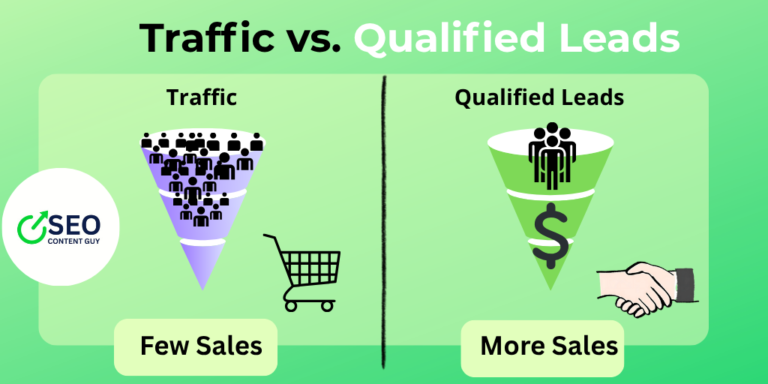
Now, the problem is not that SEO does not work for SaaS. The problem is that most SaaS SEO strategies were never built to generate a pipeline. They were built to generate traffic. But you know what? Traffic and pipelines are not the same thing.
That said, an agency that knows how to rank a local restaurant or an e-commerce store does not automatically know how to move a B2B buyer through a 90-day sales cycle.
This is the core thing to understand before you evaluate a single agency: SaaS SEO is a different discipline. It requires different keyword logic, different content strategy, and a different understanding of what “results” actually means.
What a SaaS SEO Agency Should Actually Know
Before you ask an agency for a proposal, test their knowledge. A good agency should be able to speak fluently about the following areas.
The B2B Buyer Journey
SaaS buyers do not make impulse decisions. A VP of Operations evaluating your tool will read comparison pages, read reviews on G2, ask colleagues, and watch a demo before they ever talk to sales. A good agency understands this and builds content for every stage of that journey, not just the top of the funnel.
This is why, if an agency talks mostly about driving traffic without explaining how that traffic converts into demos or trials, walk away. The truth? Organic traffic that does not convert into pipeline is a cost center, not a growth driver. So any agency pitching you on raw traffic numbers without conversion context is not the right partner.
Revenue-Driven Keyword Strategy
Any agency can find keywords with high search volume. The harder job is finding keywords that your ideal customer profile (ICP) actually searches when they are close to a buying decision.
With this in mind, you should ask an agency to show you how they approach keyword research for a B2B SaaS company.
Do they just pull up a spreadsheet of high-volume terms and start talking about rankings without mentioning intent, funnel stage, or ICP? If your answer to this question is “yes,” then that is a red flag.
The point is that B2B SaaS keyword research requires you to prioritize search intent over volume. This is so key, especially in niche markets where 200 monthly searches from the right buyer is worth more than 10,000 from the wrong one.
Technical SEO for SaaS Products
SaaS products have unique technical challenges. And this is something to consider: which agency to hire for SEO for your SaaS company?
For instance, if your product has a free trial, a login portal, a dynamic pricing page, or thousands of auto-generated URLs, you need an agency that understands how to handle those.
You know what? Things like crawl budget, JavaScript rendering, duplicate content from app subdomains, and index management are common issues that a general SEO agency will miss.
With this in mind, you should directly ask an agency this question: How do you handle technical SEO for SaaS platforms?
Can they talk about how they manage app subdomain indexation? Do they understand the difference between a marketing site and a product interface from a crawlability standpoint?
Often, the answers you get to those questions will tell you a lot.
Content Strategy, Not Just Content Production
A content mill is not a content strategy. Many agencies will offer to publish two to four posts a week and call it a strategy. That is not a strategy, but a mere publishing schedule.
A real content strategy for a SaaS company starts with understanding the business model, the ICP, the competitive landscape, and the buyer’s questions at each stage. More importantly, it maps content to funnel stages, links pieces together, supports the sales team, and measures results in terms of pipeline beyond just pageviews.
While that sounds like a lot to handle, a good agency knows how significant all these are – and how they work hand in hand.
Moving forward, you should ask an agency core questions like these: Who writes the content? Do they have writers with SaaS or B2B experience? Do they interview subject matter experts? How do they ensure technical accuracy?
These questions are critical because generic writers producing generic content will not work for a product that solves a specific business problem.
Questions to Ask Every Agency Before You Hire
One mistake most SaaS founders and CMOs make is letting an agency control the entire conversation. But that’s something you don’t want– and shouldn’t allow. So the idea is to come prepared with questions that reveal how they actually think.
Here are typical things to ask.
To start with, you can ask an SEO agency to show you a SaaS client result tied to the pipeline, not traffic.
If they can not show you how their SEO work contributed to a trial signup, a demo request, or a closed deal, they may not have done that kind of work before.
Another question to ask an SEO agency would be how they would approach your specific ICP.
For instance, if your buyer is a Head of Finance at a mid-market manufacturing company, the agency should be able to articulate how they would find and target that person through search. Most of the time, vague answers about “understanding your audience” are not enough.
Also, ask what happens in the first 90 days.
A good agency will be able to provide you with a clear plan: technical audit, keyword mapping, content roadmap, and baseline metrics. If they want six months before you see any data, get clarity on why.
Ask how they handle content that is not performing.
The agencies that grow your pipeline do not just publish and forget. Rather, they revisit underperforming content, update it, strengthen internal links, and test new angles.
That said, many SaaS companies are sitting on content that should rank but does not, simply because it was never optimized after publication.
Above all, ask about their stance on product-led SEO.
If your product has a free tier, a tool, or a feature that can attract organic search traffic on its own, a good agency should know how to build product-led SEO into the content strategy. This is one of the most underused tactics in SaaS SEO and a strong signal that an agency thinks beyond standard blog content.
Red Flags to Watch For
Some agencies are easy to disqualify once you know what bad looks like.
The idea is to watch out for agencies that promise specific ranking positions within a set timeline. No ethical agency can guarantee rankings. And a major reason that’s the case is that Google’s algorithm is not in its control.
That said, another thing to watch out for is agencies that do not ask about your sales cycle. For instance, if an agency never asks how long it takes to close a deal or what a qualified lead looks like, that’s a good indication that they are not thinking about the pipeline.
And that’s the agency you most likely don’t want to hire the SEO of your SaaS company.
Now that’s all you need to watch out for. Of course, you should be mindful of agencies that focus only on domain authority or backlinks as the primary metric.
While links matter, they are one part of a larger system. So here’s the point: an agency that leads every conversation with link building may not have a full picture of what moves the needle for SaaS.
Last but not least. It’s paramount to watch out for agencies that cannot explain their reporting. As a leader of a SaaS team, you should be able to look at a monthly report and see a direct line between SEO activity and business outcomes.
In other words, if the report an SEO agency presents to you at the end of the month is only a spreadsheet of keywords and rankings with no connection to leads or revenue, then there is a problem.
You know what? Unexplained drops in organic traffic without a plan of action are a clear sign of a disengaged agency.
In-House vs. Agency: When Each Makes Sense
Before you commit to an agency, ensure you actually need one. Most of the time, some SaaS companies at the right stage are better served by building an in-house SEO function rather than outsourcing it.
An in-house SEO lead might give you more control if you have a large content library that needs strategic oversight. But if you need to build an SEO strategy from “point zero” and move fast, an experienced agency with a SaaS-specific track record is usually faster.
The honest answer is that the right choice depends on your stage, budget, and how much internal bandwidth you have to manage an agency relationship.
In any case, a good agency requires active participation from your side too. You will need to provide product knowledge, ICP input, subject matter experts for interviews, and feedback on content direction.
Now, you may have heard of agencies that say they handle everything with no input from you. In practice, such agencies tend to produce generic work.
How to Compare Agency Proposals
Once you have shortlisted two or three agencies, compare them right away.
Beyond the deliverables, you should look at the strategy they propose. Truth be told, deliverables are easy to list. Typical examples would be four blog posts a month, one technical audit, ten backlinks, amongst others.
You know what? Strategy is harder. Yet this question remains: Does the SEO agency’s plan reflect an understanding of your market, buyer, and competitive positioning?
Another thing to look at is who will actually work on your account. This question is critical because most agencies do. Many of them win business with senior people and then hand the account to junior staff. This is why asking who specifically will lead your account and what their experience with SaaS companies is paramount.
Now that’s not all. One more thing to look at agencies’ websites is their pricing in context. Undoubtedly, the cost of SaaS SEO services varies widely. And yes, cheap is rarely efficient when it comes to technical and strategic SEO work.
However, note that the question is not what the agency charges, but what you’ll get in return for that investment. Also, it entails knowing how quickly the cost you incur on SEO can return value against your current customer acquisition cost.
Here’s the catch: if your CAC is already high, a well-chosen SEO agency can be one of the most efficient channels to bring it down over time.
The Right Agency Treats SEO as a Revenue Channel
The best way to summarize what you are looking for is this: you want an agency that treats SEO the same way your sales team treats the pipeline. But the reality is that your SEO agency can do this without discipline, data, and a clear understanding of what moves your buyer from awareness to decision.
SEO done well is not a content game. It is a revenue strategy.
The agency you choose should know the difference, and they should be able to prove it.
Start with a clear brief, ask hard questions, and do not sign until you have seen evidence that they have built organic growth for a SaaS business like yours. You’ll know when you find an agency that meets that bar.
This article is part of SEO for B2B SaaS: The Complete Guide to Driving Pipeline (Not Just Traffic). You can read that too.
Once you know what you are looking for, the next step is to compare it against what a real SaaS SEO engagement looks like. Our SaaS SEO service page gives you a clear picture of scope and what to expect before you commit.