
The keyword research tool you use shapes the keywords you find. And the keywords you find shape the content you build. Similarly, the content you build either drives pipeline or it does not.
This isn’t a keyword research strategy guide — it’s a practical, side-by-side comparison of the tools you’d use inside that strategy. If you’re starting from zero, read our SaaS keyword research framework first.
This means picking the right keyword research tool for your SaaS team is more than a software decision. It is a strategic decision.
Truth be told, the market is full of tools that all claim to do the same thing.
Most of them do not. They serve different workflows, team sizes, and stages of keyword research. With this in mind, the point remains: picking the wrong tool for your situation will either overwhelm you with data you cannot act on or limit you to insights that are too shallow to be useful.
Interestingly, this guide breaks down the eight most important keyword research tools for SaaS teams. It also explains what each one does best, and tells you exactly which ones to use based on where your company is today.
What Makes a Keyword Research Tool Right for SaaS
As mentioned already, there are tons of keyword research tools. But not every keyword research tool is built for B2B SaaS workflows.
In short, most were designed for e-commerce, publishing, or general SEO use cases. This is why, before comparing specific tools, you need to know the four things that make a keyword research tool actually useful for a SaaS content team.
They include:
1. Intent Filtering
SaaS keyword research is not about finding high-volume keywords, but about discovering keywords that position searchers as potential buyers. And that’s why a tool that lets you filter keywords by search intent becomes paramount.
With it, you can separate informational searches from commercial and transactional ones. And this in turn saves hours of manual evaluation.
The bottom line is that this matters especially when you are building a keyword analysis process that evaluates intent as one of its five core dimensions. A tool that surfaces intent signals automatically makes that process faster and more accurate.
2. Competitor Gap Analysis
The fastest way to find keywords worth targeting in B2B SaaS is to look at what your direct competitors rank for that you do not. A tool without a strong competitor gap feature forces you to build your keyword list from scratch every time, which is slower and less targeted.
3. SERP Feature Visibility
Google surfaces different content types depending on the query: featured snippets, People Also Ask boxes, image packs, video carousels. This is why understanding and knowing how to interpret which SERP features appear for a keyword is important.
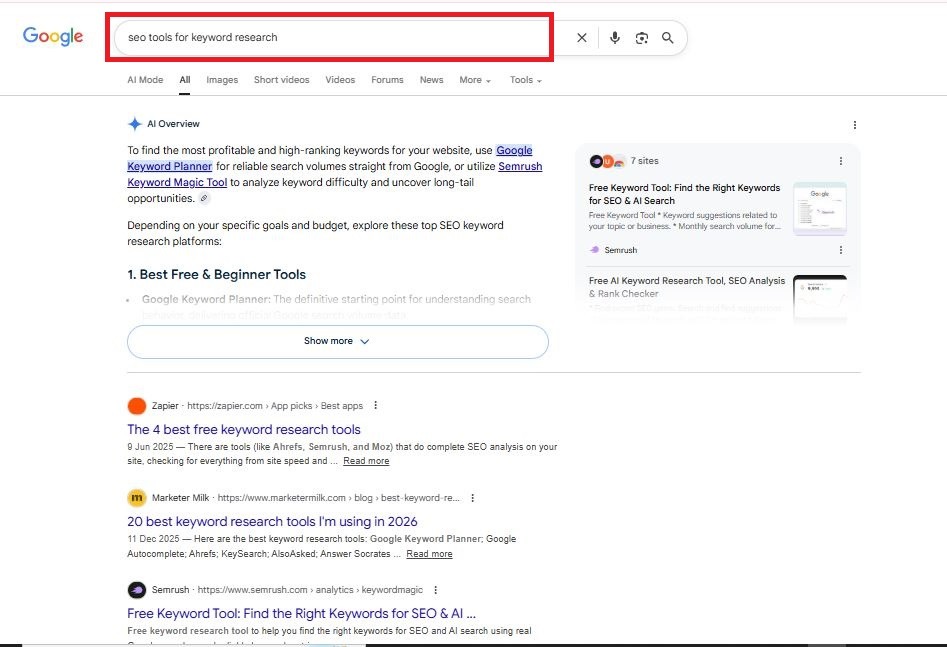
Often, the SERP feature that appears when you type a keyword tells you what type of content Google rewards for that search. Also, you can somewhat determine whether there is a structured opportunity for you to capture more visibility than a standard blue link provides.
4. Accuracy at Low Volume
B2B SaaS keywords often have low search volume. This is why a tool that rounds everything below 100 searches to zero is useless for niche B2B research.
Considering this reality, you need a tool that surfaces granular data at the low end of the volume range, because that is where most of your highest-intent keywords live.
The reality is that finding and validating low and zero-volume keywords is one of the highest-leverage activities in B2B SaaS keyword research. And your tool must support it.
The Eight Best Keyword Research Tools for SaaS Teams
1. Ahrefs
Ahrefs is the most complete keyword research tool available for SaaS teams doing serious content work. Its keyword database is one of the largest on the market. Another thing is its difficulty scores— they are among the most reliable. But that’s not all. Its competitor gap analysis features are unmatched.
That said, the two Ahrefs features that matter most for SaaS keyword research are the Content Gap tool and the Top Pages report. Starting with “Content Gap,” it shows you every keyword a competitor ranks for that you do not, sorted by traffic value.
On the other hand, “Top Pages” shows you which pages on any domain drive the most organic traffic. This feature enables you to quickly identify which keywords are powering your competitors’ content strategies.
Apart from that, Ahrefs has the best backlink index available, which matters when evaluating keyword difficulty. The difficulty score in Ahrefs is based on the referring domain count of the pages currently ranking, which gives you a more accurate picture of what it will actually take to compete for a keyword than a composite score that factors in domain authority.
A weakness of Ahrefs is its pricing. It starts at $129 per month and scales quickly for larger teams. This cost is a barrier for early-stage SaaS companies with limited budgets. But for growth-stage teams with active content programs, it is one of the most defensible tools in the stack.
Here are crucial takeaways about this tool:
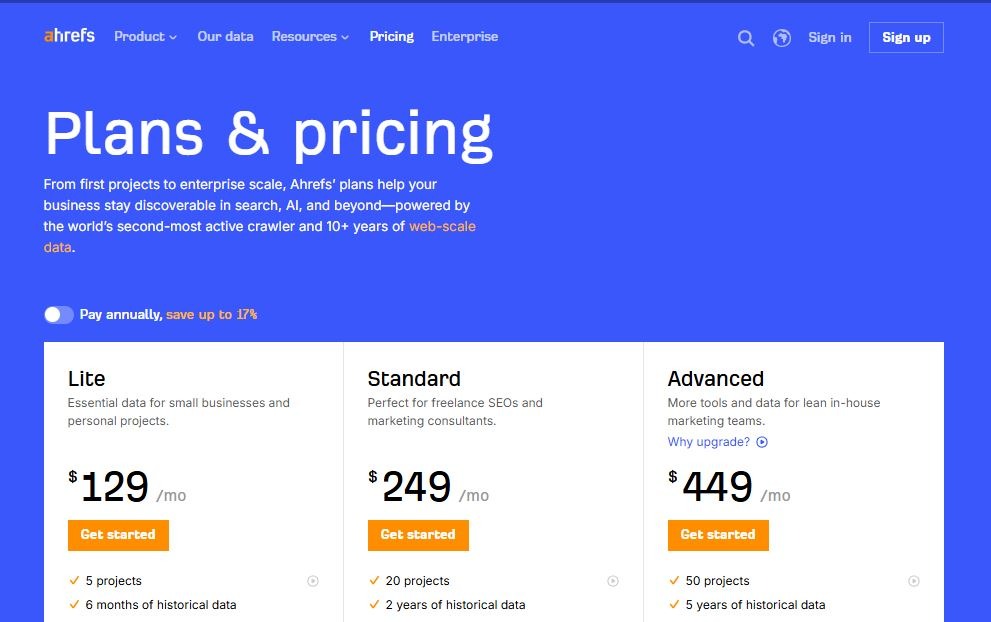
- Best for: competitor gap analysis, BoFU keyword discovery, backlink research, content planning
- Pricing: from $129/month
- SaaS team size: growth-stage and above
2. Semrush
Semrush is Ahrefs’ closest competitor and is better than Ahrefs in one specific area: broad keyword discovery at scale. Its Keyword Magic Tool is one of the best keyword generation features available. You can enter a seed keyword, and it returns thousands of related terms organized by topic cluster, intent type, and question format.
The intent filter in Semrush is particularly useful for SaaS teams. You can filter a keyword list by informational, navigational, commercial, or transactional intent in a single click. This suddenly turns a raw list of 2,000 keywords into a focused shortlist of commercial and transactional terms in seconds.
Semrush also has strong local and international keyword data, which matters for SaaS companies targeting buyers in specific regions or expanding into new markets.
A limitation of Semrush is that its backlink data is less comprehensive than Ahrefs. This makes it slightly less reliable for difficulty evaluation in highly competitive niches. Still, the reality is that Semrush is an excellent primary tool for teams that prioritize keyword discovery and intent analysis over backlink research.
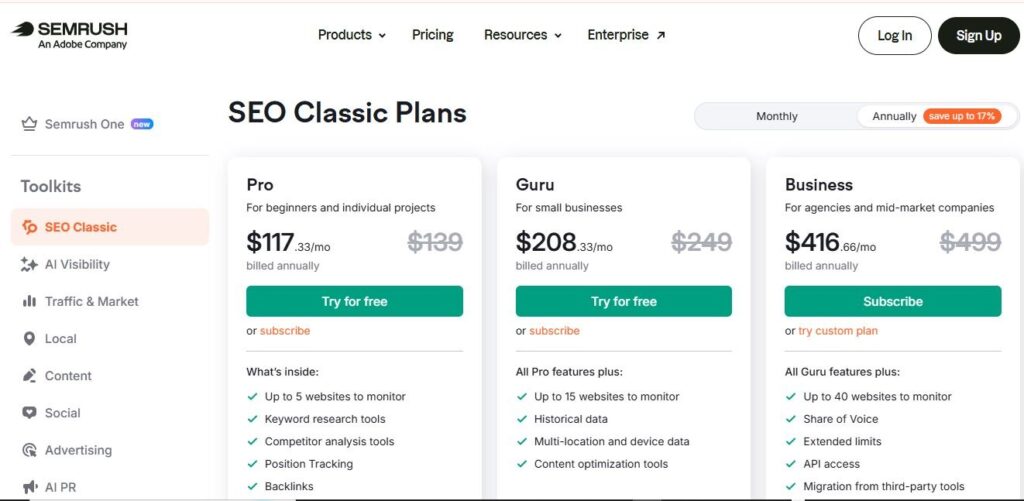
Other core information you should know:
- Best for: large-scale keyword discovery, intent filtering, international research
- Pricing: from $139/month
- SaaS team size: growth-stage and above
3. Google Search Console
Google Search Console is not an optional tool in your SEO stack. Every SaaS company with a website should have it set up and check it weekly. The good thing is that it is free. But more than that, it shows you real data directly from Google and surfaces keyword opportunities that other tool on this list misses.
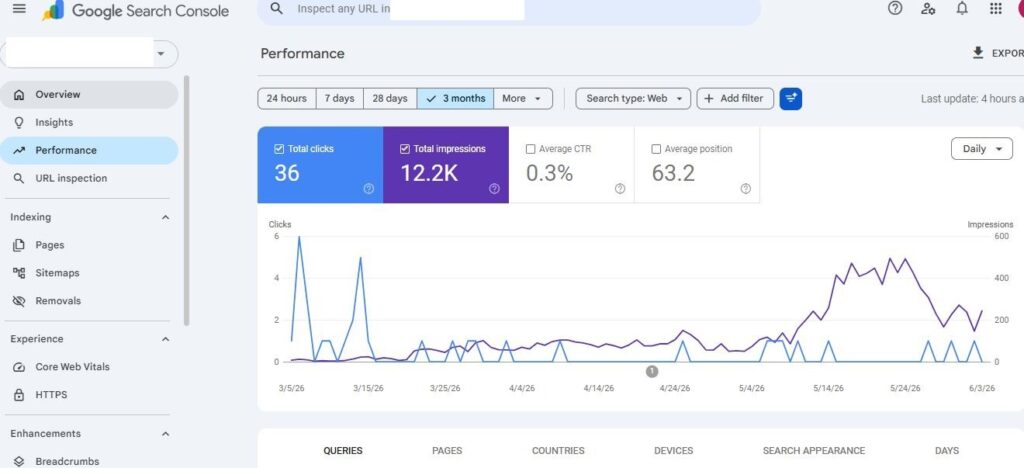
For instance, the Queries report in GSC shows you the actual search terms that triggered impressions for your pages over any time period you choose. Of course, this includes keywords that show zero volume in paid tools, which you are ranking for on page two or three that you could push to page one with a focused update.
Also, at a glance, it reveals keywords that generate clicks at a much lower impression count than you would expect, which signals strong intent alignment.
For how to act on GSC data strategically (including CTR and impression analysis), see the Search Console section of our SaaS keyword research guide.
Usually, the reason for that is that the title tag or meta description does not match the search intent well enough. The truth is, fixing issues like this is faster and cheaper than building new content.
That said, GSC is also the primary tool for uncovering the zero-volume keywords that your ICP is actually searching. No other tool gives this level of accuracy on low-volume queries because no other tool has access to real Google search data.
Essential takeaways about Google Search Console:
- Best for: real query data, zero-volume keyword discovery, CTR optimization, impression monitoring
- Pricing: free
- SaaS team size: every team, regardless of stage
4. Keywords Everywhere
Keywords Everywhere is a browser extension that overlays search volume, CPC, and competition data directly on Google search results pages, Google Search Console, YouTube, Amazon, and dozens of other platforms. This tool helps you see keyword data in context as you browse, without switching between tabs or exporting to spreadsheets.
Now for SaaS founders and content leads who do keyword research on the go, it is one of the most efficient tools available at its price point.
For instance, when you search a competitor’s brand name and see related keyword data appear inline, or when you browse a competitor’s top-ranking page and instantly see what other keywords that page ranks for, the time savings add up fast.
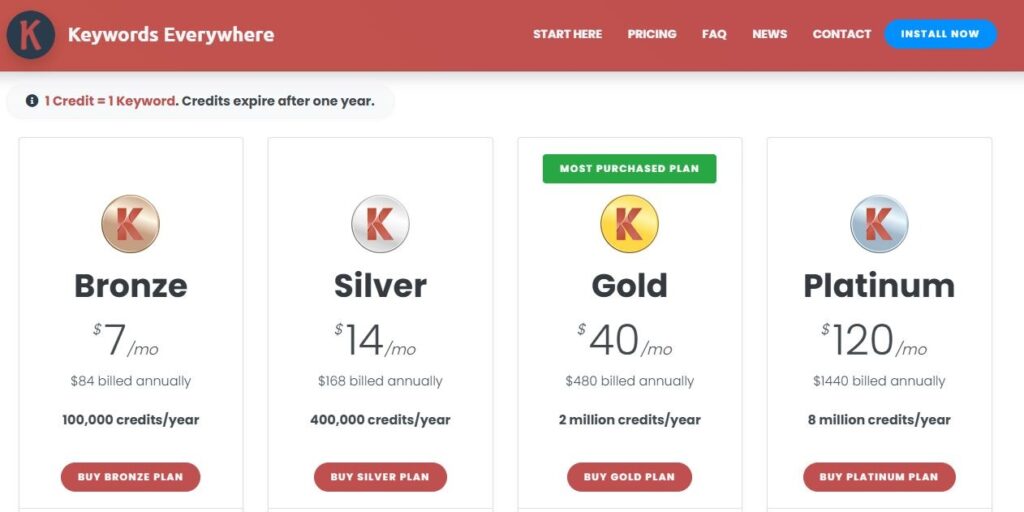
In any case, it is important to note that Keywords Everywhere is not a replacement for Ahrefs or Semrush. In short, it does not have a competitor gap tool, a site audit feature, or a comprehensive backlink index. But this truth remains: as a supplementary tool for quick keyword validation and opportunity spotting during normal browsing, Keywords Everywhere is hard to beat at $15 per month.
Core things you take away about this tool:
- Best for: inline keyword data, quick validation, low-budget research
- Pricing: from $7/month
- SaaS team size: solo operators, early-stage teams
5. AlsoAsked:
AlsoAsked visualizes the People Also Ask data that Google generates for any search query. It maps questions in a branching tree format showing the parent question, the related questions Google surfaces for it, and the follow-on questions that branch from those.
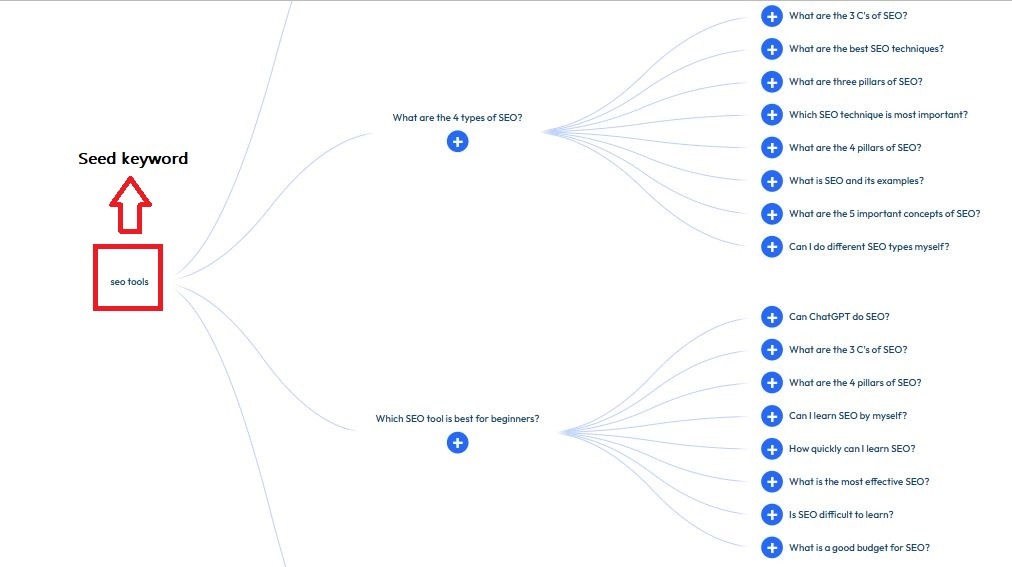
This is one of the most useful tools for content planning that SaaS content teams can adopt. It shows you exactly how your buyers think about a topic, what questions they ask in sequence, and where their curiosity leads as they research a problem.
That sequence maps directly to funnel stages.
Note the top-level questions in an AlsoAsked tree are usually top-of-funnel: broad, awareness-level searches. And the questions that branch two or three levels deep are usually commercial or transactional. These are often specific, intent-rich searches from buyers who already understand the basics.
This makes AlsoAsked particularly valuable when you are building content that targets conversion-stage buyers who are comparing vendors and evaluating specific solutions. The bottom line? The deep branches of the question tree show you the specific objections and comparisons those buyers are researching.
With all this in mind, here are essential things to note about this tool:
- Best for: H2 planning, FAQ content, funnel stage mapping, buyer question research
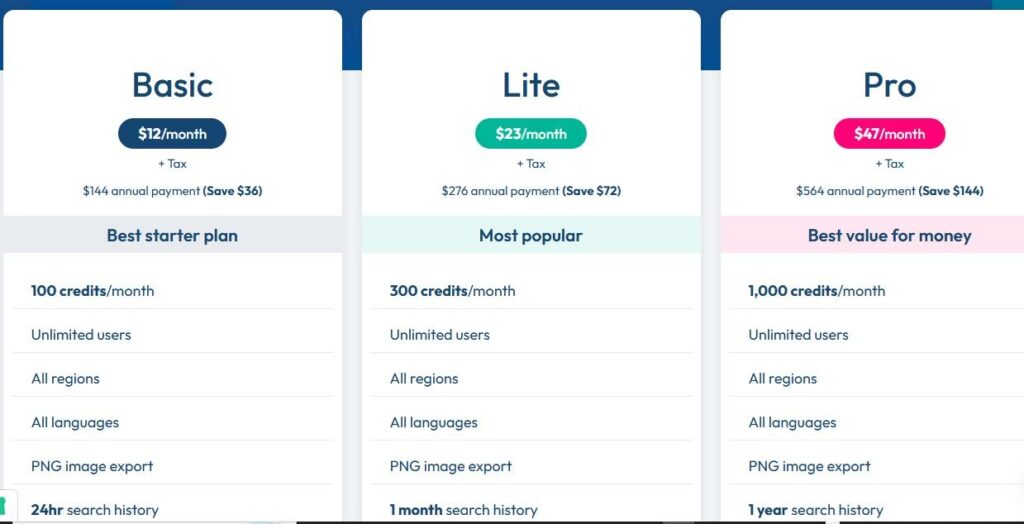
- Pricing: free tier available, paid from $15/month
- SaaS team size: all stages
6. Moz Keyword Explorer:
Moz Keyword Explorer is the most approachable keyword research tool on this list. And this is because its interface is clean. Not only that, its metrics are explained in plain language, which makes it the best starting point for SaaS founders or marketing managers who are new to keyword research.
Its Priority Score combines volume, difficulty, and organic click-through rate into a single number. And this simplifies the early stages of keyword evaluation. The point is that for teams that have not yet built a formal keyword analysis process, this kind of pre-calculated signal helps avoid the most obvious mistakes.
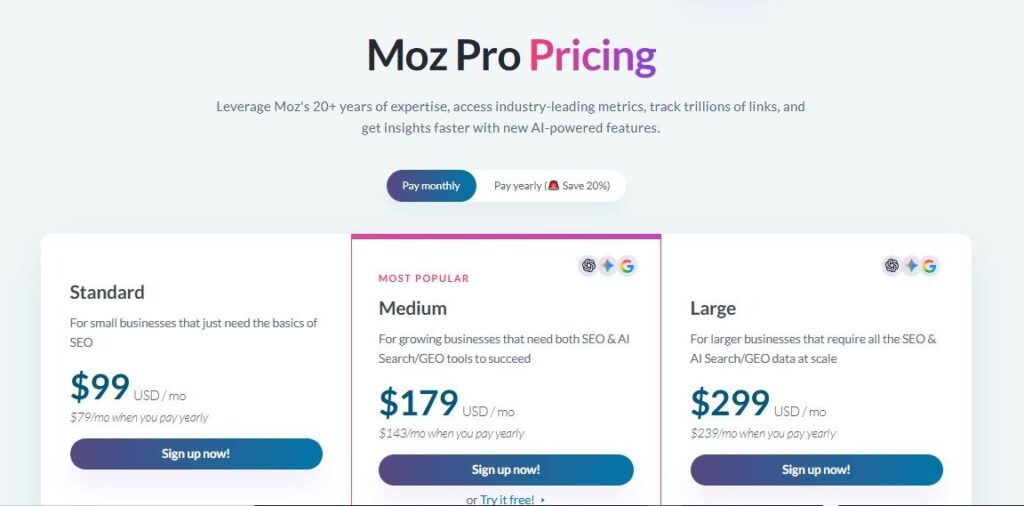
But the limitation of Moz is depth. And that’s because its keyword database is smaller than Ahrefs and Semrush. Another thing is that its competitor analysis features are less comprehensive. G2 reviews confirm Moz’s backlink index “isn’t as extensive as tools like Ahrefs or SEMrush“, a limitation that drives teams to upgrade, though no specific transition data exists.
Here are things you should keep to heart about this tool:
- Best for: beginners, small keyword lists, quick priority scoring
- Pricing: from $99/month
- SaaS team size: early-stage, teams new to SEO
7. AnswerThePublic:
AnswerThePublic pulls search suggestion data from Google and Bing and organizes it into categories: questions (who, what, where, when, why, how), prepositions (for, with, without), comparisons (versus, or, and), and alphabetical variations.
It is not a keyword research tool in the traditional sense. It does not show keyword difficulty or backlink data, although the paid version reveals search volume. What it does is surface the full universe of ways people phrase questions around a topic, which is extremely useful for ideating top-of-funnel educational content.
With that in mind, the point is that for SaaS teams building awareness content around broad problem categories, AnswerThePublic is a fast and visual way to identify content angles that might not appear in a standard volume-based keyword research session.
- Best for: top-of-funnel ideation, content angle discovery, question research
- Pricing: from $6.66/month
- SaaS team size: all stages, supplementary use
8. RevPages
RevPages is a SaaS keyword research and SEO planning platform built around revenue, and not traffic alone. Instead of producing a large list of loosely related keywords, it analyses your website, search data, and customer lifetime value to identify the pages most likely to generate customers quickly.
The platform focuses particularly on lower-funnel opportunities such as competitor alternatives, product comparisons, use cases, industry pages, templates and “best software” searches. It forecasts the potential revenue uplift of each opportunity and prioritises them based on commercial value and how realistically your website could rank. This helps SaaS teams decide what to create or optimise first, rather than relying on search volume and keyword difficulty in isolation.
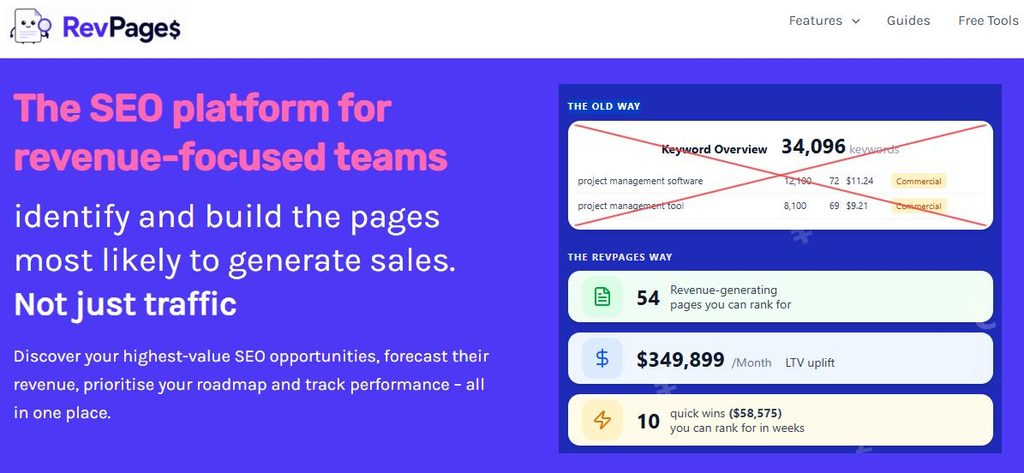
RevPages also turns selected opportunities into a prioritised content roadmap, generates AI content briefs, and tracks the estimated revenue impact of published pages. Its main limitation is that it doesn’t intend to replace a broad SEO platform for backlink analysis, technical audits, or unrestricted keyword exploration. It suits teams that already understand their market but need a faster way to find and act on commercially valuable search opportunities.
Here are the key things to know:
- Best for: lower-funnel SaaS keyword discovery, revenue forecasting, opportunity prioritisation, and content planning
- Pricing: Currently free, with paid plans being introduced soon
- SaaS team size: founders, in-house marketing teams, and SaaS SEO agencies at any stage
Quick Comparison: All Eight Tools at a Glance
| Tool | Best For | Pricing (from) | SaaS Verdict |
|---|---|---|---|
| Ahrefs | Competitor gap + BoFU discovery | $129/mo | Best all-rounder for growth-stage SaaS |
| Semrush | Broad discovery + intent filtering | $139/mo | Best for teams doing high-volume research |
| Google Search Console | Real query data from your own site | Free | Non-negotiable for every SaaS team |
| Keywords Everywhere | Inline volume data while browsing | $7/mo | Best budget add-on for solo operators |
| AlsoAsked | Mapping buyer questions by funnel stage | Free tier | Best for H2 and FAQ content planning |
| Moz Keyword Explorer | Beginner-friendly keyword discovery | $99/mo | Good starting point, limited at depth |
| AnswerThePublic | ToFU content ideation at scale | $6.66/mo | Useful for awareness content, not BoFU |
| RevPages | Revenue-focused keyword discovery, opportunity prioritization, and content planning | Free currently; paid plans coming soon | Excellent for SaaS teams that want to prioritize search opportunities based on revenue potential rather than traffic alone. |
Which Tools to Use at Each Stage of Your SaaS Growth
The truth is that no SaaS company needs every tool on this list. Your team only needs the right stack, which often depends on your team size, content output, and how mature your keyword research process is.
Early-Stage SaaS (Pre-Series A)
At this stage, you have a limited budget and limited time. As such, you need to find keywords you can win quickly and that connect directly to your ICP. Because of this, your stack should be lean and high-impact. Of course, it can include:
- Google Search Console: free and non-negotiable
- Keywords Everywhere: cheap, fast, and useful for daily research
- AlsoAsked: free tier covers most use cases at this stage
That said, here’s the thing: your keyword research at this stage should focus tightly on the types of searches that signal buying intent rather than building a broad awareness content library. This means that, in your consideration of business outcomes, pipeline comes first.
Growth-Stage SaaS (Series A to Series B)
At this stage, you’re up and ready to compete. And this is because you have a content team, a budget for tools, and a need to scale keyword research across multiple personas and use cases. You need a primary research tool with strong competitor analysis and a supplementary stack for specific use cases.
- Ahrefs or Semrush: choose one as your primary tool
- Google Search Console: continue using it alongside your paid tool
- AlsoAsked: for content planning and H2 structure
- Keywords Everywhere: for browsing-session research
Scaling SaaS (Series B and Beyond)
Here, you are producing content at volume, running multiple clusters across several pillar topics, and competing for high-difficulty keywords where winning requires both content quality and domain authority.
Based on this, you can use:
- Full Ahrefs or Semrush suite with team seats
- Dedicated rank tracking tool such as AccuRanker or SERPWatcher
- Google Search Console with GSC data piped into your analytics stack
- AlsoAsked and AnswerThePublic for ideation at scale
At this scale, your keyword research tool feeds directly into your competitive keyword strategy. And the goal is not just to find winnable keywords but to identify the specific gaps where larger competitors have thin coverage and build content that outranks them on those terms.
How to Get the Most From Any Keyword Research Tool
First, you need to understand that the tool is not the strategy. Every tool on this list will give you bad results if you use it incorrectly. Here are the three most common mistakes SaaS teams make with keyword research tools and how to avoid them.
Mistake 1: Trusting the Volume Number Without Checking the SERP
Search volume is an estimate, not a guarantee. This is why, before you commit a keyword to your content roadmap, it’s critical to open Google and look at what is currently ranking for it. For instance, upon checking the SERPs, if the results are dominated by aggregator sites, Wikipedia, or brands with domain ratings ten times yours, then the volume number is irrelevant. The reality is that you cannot win the traffic even if the keyword is real.
Often, this manual SERP check is the final step in a rigorous keyword evaluation process. No tool replaces it.
Mistake 2: Using Only One Tool
Every keyword research tool has gaps in its database. A keyword that shows zero volume in Semrush might show 90 searches per month in Ahrefs. A keyword that Ahrefs rates as great difficulty might have three beatable pages in the top five when you check the SERP manually.
Cross-reference important keywords across at least two tools before making final decisions. This takes five extra minutes and prevents expensive content mistakes.
Mistake 3: Building a List and Never Updating It
Keyword data changes. New competitors publish new content. Google updates how it ranks certain query types. Your own domain authority grows, which changes which keywords are now within reach.
Revisit your keyword list every quarter. Pull fresh data from your tools. Compare it against your current rankings in GSC. Adjust your roadmap based on what has changed. This is the operational discipline that separates SaaS content programs that compound over time from the ones that plateau after 12 months. None of these tools replace a documented process. See our SaaS keyword research framework for how to turn raw tool data into a prioritized content roadmap.
