










I help businesses turn search demand into qualified organic traffic and growth through SEO strategy, content, technical SEO, internal linking, and AEO/GEO.
Open to remote SEO opportunities | B2B SaaS · SEO Strategy · Technical SEO · Content · AEO/GEO
Founder of SEO Content Guy, where I publish and test practical SEO strategies for B2B SaaS, EdTech, and professional services.
My journey into SEO started with content writing.
I had been writing content for businesses when I realized that good writing alone was not enough to consistently get content discovered. Understanding how search engines work, what people search for, and why some pages perform better than others was becoming just as important.
So I decided to learn SEO by putting it into practice.
I launched my own blog, researched keywords, created and optimized content, and started studying what happened when those pages appeared in search. Some of my content eventually reached Google’s first page, giving me practical experience that went beyond simply reading about SEO.
Those early results helped me land my first SEO-related Upwork project. From there, SEO became a much bigger part of my career.
Today, I have 4+ years of experience across SEO content, keyword research, competitor analysis, on-page SEO, technical SEO, and content strategy.
I’ve worked independently with businesses and also worked within an SEO agency environment, supporting SEO campaigns across different industries.
I now run SEO Content Guy, where I focus primarily on SEO for SaaS, EdTech, and professional services.
I didn’t begin my career as a technical SEO specialist.
I started as a content writer.
That experience taught me how to research topics, understand audiences, explain ideas clearly, and create useful content. But it also exposed a problem: great content doesn’t help much if the right people never find it.
That led me deeper into SEO.
Rather than learning SEO only from theory, I started experimenting with my own websites and content. I researched search terms, studied search results, optimized pages, and watched how those changes affected organic visibility.
Over time, I moved from simply writing content to thinking about the entire search process:
That shift from content creation to search strategy has shaped how I approach SEO today.
SEO strategies for SaaS companies, including keyword research, content strategy, product-led SEO, technical SEO, and organic acquisition.
Finding search opportunities, understanding search intent, clustering keywords, and turning research into focused content plans.
Crawling, indexing, canonicalization, sitemaps, robots.txt, internal linking, structured data, JavaScript SEO, and page performance.
Creating content around the questions, problems, and decisions that matter to a business’s target audience.
I approach SEO from both the search engine and business perspective.
That means looking beyond whether a page ranks and asking what happens after someone finds it.
I look at search intent, the buyer’s stage, the type of page that should rank, the information the searcher needs, and how that page contributes to the wider customer journey.
My goal is to create search strategies that connect visibility with meaningful business outcomes.
Building a personal SEO brand across SaaS content, TikTok, and YouTube.
Managed multi-client SEO accounts, contributing to strategy, execution, analysis, and client communication.
Guided editorial strategy through keyword research and performance analysis.
Wrote intent-driven articles, achieving first-page rankings for competitive keywords.
Produced E-E-A-T-aligned content; named Writer of the Month, June 2023.
Led content strategy and on-page SEO execution across the site.
LIVE SEO PROJECT
A live SEO project I own and manage, showing how I turned a search question into a broader search visibility opportunity.
Project: SEO Content Guy
Role: SEO Strategist & Executor
Focus: Keyword Research · Content Strategy · Internal Linking · Organic Search · AI Search
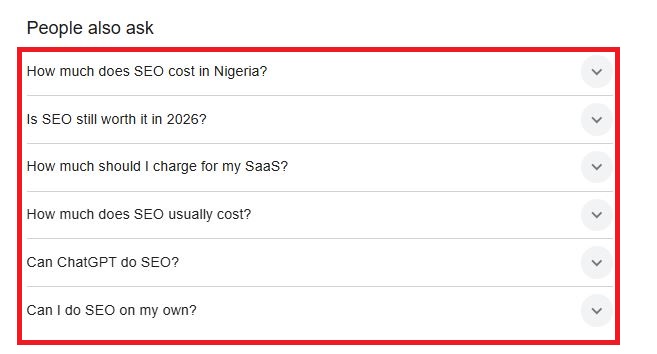
THE QUESTION
THE APPROACH
I turned these core questions into a broader content strategy, organizing related topics into pillar-and-cluster structures.
For SaaS SEO pricing, I created content around related searches such as SaaS SEO agency pricing and SaaS SEO budgets, while using internal links to connect relevant content across the site.
THE PROBLEM
The goal wasn’t simply to rank for one keyword.
I wanted to know whether the content could gain visibility across the broader set of searches surrounding SaaS SEO pricing.
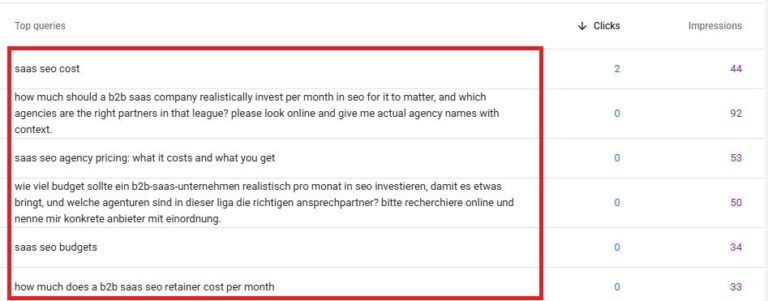
So instead of judging the page by a single ranking, I monitored the queries Google was actually associating with it.
THE DATA
Google Search Console started showing impressions for a range of SaaS pricing-related searches.
Google Search Console revealed search visibility beyond the original question I had targeted.
THE DISCOVERY
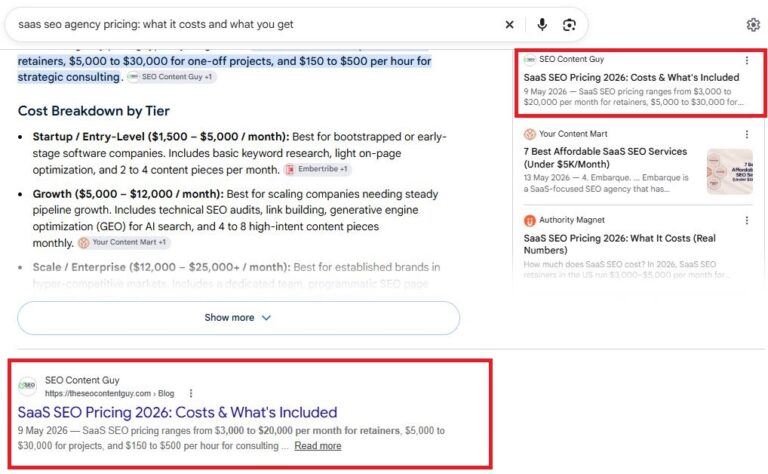
“SaaS SEO agency pricing: What It Costs and What You Get”
“SaaS SEO agency pricing”
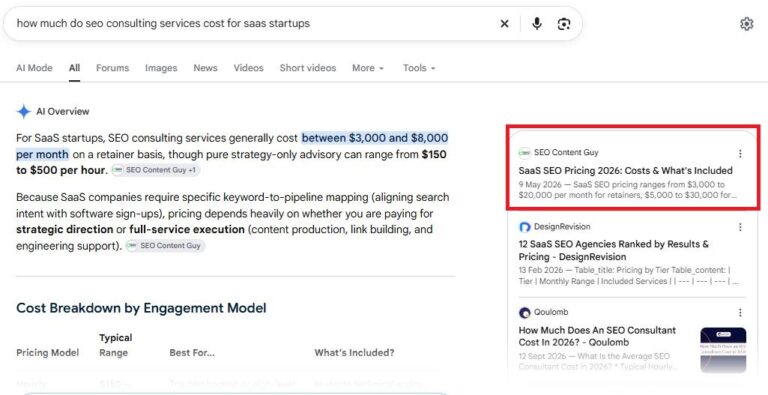
The page was also surfaced as a cited source in Google’s AI Overview for a SaaS SEO pricing-related search.
THE RESULT
What started as one question about SaaS SEO costs became a broader search visibility opportunity.
The project demonstrated the value of looking beyond individual keywords and building content around the questions, relationships, and search intent behind them.
My approach:
Search questions → Topic architecture → Content → Internal linking → Search data → Refinement
SEO Content Guy is my live testing ground for this process. I use it to research, implement, measure, and refine SEO strategies in a real search environment.
SELECTED SEO WORK
How I identified two pages competing for the same search query, investigated the overlap, and clarified their topical roles.
SITUATION
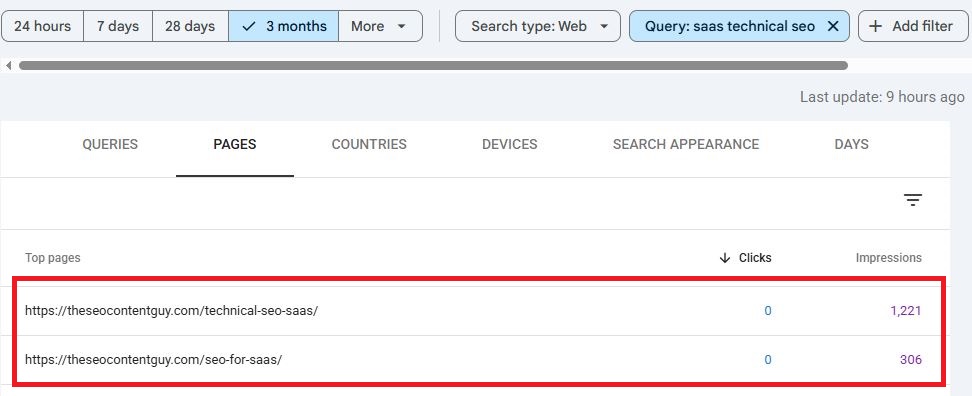
Three months of Google Search Console data showed that both the Technical SEO for SaaS page and the broader SEO for SaaS page were receiving impressions for “SaaS technical SEO.”
Technical SEO for SaaS
SEO for SaaS
THE PROBLEM
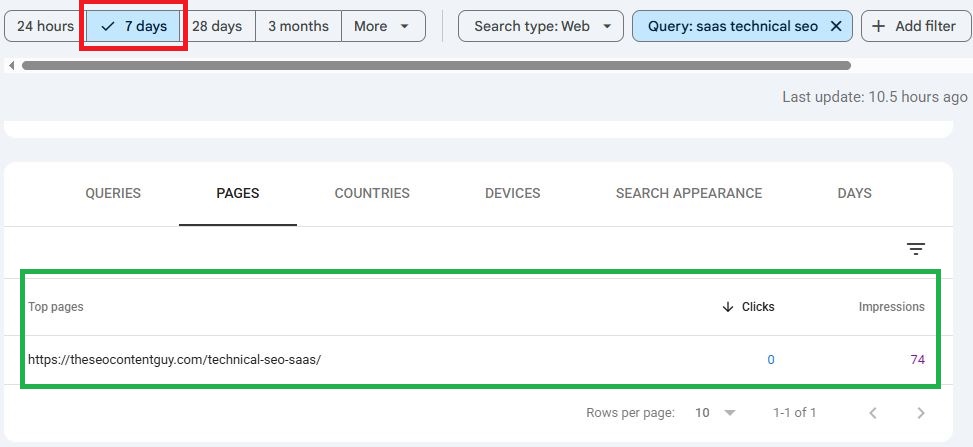
The Technical SEO for SaaS page was the page I intended to rank for the query, but Google was also surfacing the broader SEO for SaaS page.
Technical SEO for SaaS → intended page
SEO for SaaS → broader page
THE INVESTIGATION
01
H1
02
Metadata
03
Structured data
04
Content structure
05
Topical context
THE CHANGE
I made targeted contextual and structural updates to both pages to strengthen their topical distinction and make their relationship clearer.
Broader SaaS SEO topic
Technical SEO specifically for SaaS
THE RESULT
After the updates, Google Search Console showed the Technical SEO for SaaS page becoming the page associated with impressions for “SaaS technical SEO,” rather than both pages competing for that visibility.
On-page SEO · Search intent · Internal linking · Google Search Console
THE SITUATION
I was building SEO Content Guy around the questions SaaS teams actually search for. One of those questions was simple: How much does SaaS SEO cost?
ORIGINAL TITLE
Cost of SaaS SEO Services: What You Should Actually Expect to Pay in 2026
THE CHANGE
I made the page’s search focus clearer.
BEFORE
“Cost of SaaS SEO Services: What You Should Actually Expect to Pay in 2026”
AFTER
Updated August 5, 2026 · 12:53 PM
“SaaS SEO Pricing 2026: Costs & What’s Included”
Clarified the primary search topic
Strengthened topical relevance
Added contextual internal links
THE DATA
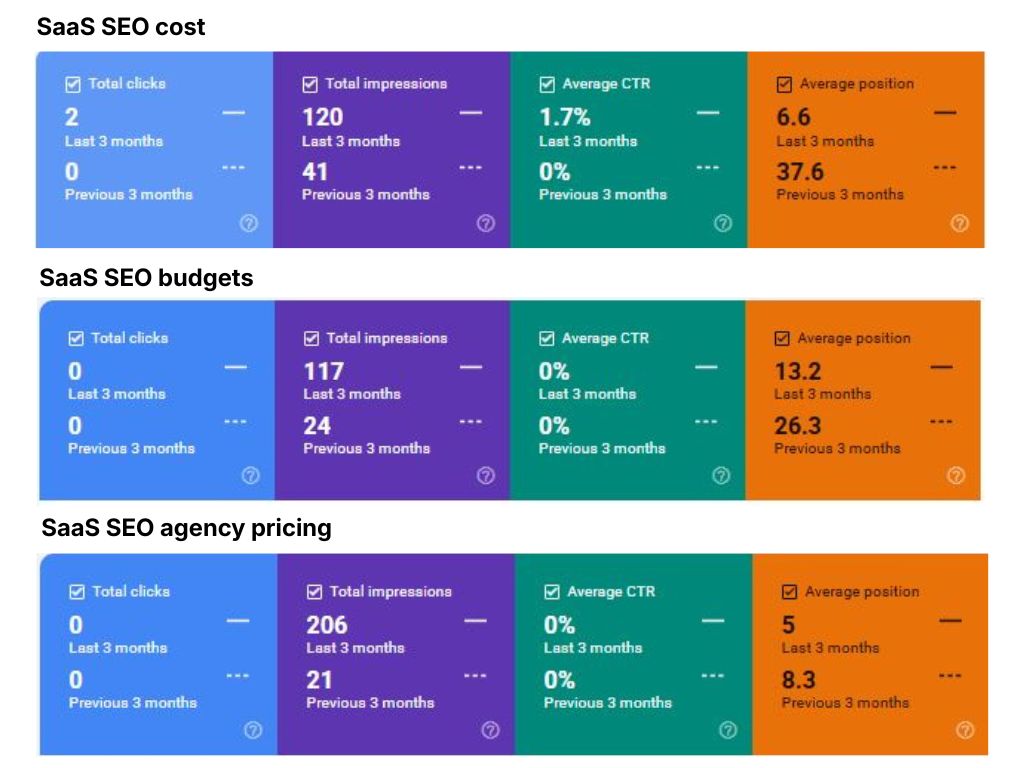
I used Google Search Console to compare the page’s visibility across related SaaS SEO pricing queries.
SaaS SEO cost
40 impressionsPos. 37.88
120 impressionsPos. 6.87
↑ 31 positions
SaaS SEO budgets
24 impressionsPos. 26.33
115 impressionsPos. 13.30
↑ 13 positions
SaaS SEO agency pricing
8 impressionsPos. 15.62
52 impressionsPos. 8.44
↑ 7 positions
SaaS SEO agency pricing: What It Costs and What You Get
12 impressionsPos. 3.67
151 impressionsPos. 3.9
↓ 2 positions
The clearest movement came from “SaaS SEO cost.”
The page moved from an average position of 37.88 to 6.87, while impressions increased from 40 to 120.
It also generated 2 clicks for that query in the latest period.
Average position
Impressions
Google Search Console data showing the page’s search visibility.
WHAT I LEARNED
A page doesn’t always need more content. Sometimes it needs a clearer purpose.
The important part wasn’t simply adding more content. I first looked at whether the page clearly communicated the search intent it was designed to satisfy.
SEO TAKEAWAY
When I optimize an existing page, I don’t automatically start by adding more words. I first look at what the page is supposed to rank for, how clearly that purpose is communicated, and whether the surrounding content and internal links support it.
SEO tools I use for research, analysis, technical audits, reporting, and performance monitoring.
August 31, 2026
Your SaaS business is most likely facing an indexation issue if any of the following sounds...
Read article →August 25, 2026
A canonical tag is an HTML element that tells search engines which version of a page...
Read article →August 22, 2026
Many people (including some SEO ‘gurus’) blame crawl budget for a lot of things it has...
Read article →August 6, 2026
Your robots.txt file is a plain-text rulebook that tells crawlers which parts of your site they...
Read article →August 5, 2026
An XML sitemap is a file that shows search engines the pages you want them to...
Read article →August 4, 2026
Many SaaS companies know SEO is important, but they still struggle with one big question: who...
Read article →If you’re looking for help with SEO, content strategy, or organic growth, you can learn more about our services or get in touch.