
Most SaaS companies treat SEO like a blogging game. They pick keywords, hire writers, publish articles, and then wait. But while traffic trickles in, pipelines don’t.
And that’s because they’re doing content SEO — not product-led SEO.
Product-led SEO means you rank for the exact problems your product solves — using your features, integrations, and use cases as the pages that rank. So it’s not about using blog posts about your industry, but content centering on your actual product.
Take Canva, for example. They don’t rank because they blog well. They rank because they built thousands of template pages that put their product in front of people searching for exactly what it does. The same goes for Zapier. They built a page for every app-to-app integration imaginable.
That’s product-led SEO.
In this guide, you’ll learn what it is, why it beats traditional content SEO for most SaaS businesses, and how to build it step by step — starting today.
But before we do that, let’s answer this question:
What Is Product-Led SEO for SaaS?
Product-led SEO is a strategy where SaaS companies use their product’s core functionality to generate search-optimized pages at scale. Instead of writing blog posts, you create landing pages, feature pages, integration pages, and use-case pages that map to real searches your target buyers make.
Think about how tools like Canva, Ahrefs, Zapier, and HubSpot rank.
They do not just rank because they blog well. They rank because they built pages that serve a search intent their product already solves. Canva is a good example. They have thousands of template pages.
Another example is Zapier. It has an integration page for every software combination imaginable. Likewise, HubSpot ranks for every CRM use case under the sun.
That’s what you call product-led SEO.
You know what? For B2B SaaS specifically, this matters a lot. Your buyers are searching for solutions to specific problems. They type things like “Salesforce to HubSpot sync tool” or “automated invoice tracking for agencies.”
Now, here’s the thing: if your product solves that problem-oriented query your users search for, you’re most likely going to rank for it. The point is that you will not rank just by writing a blog post.
You need a dedicated, well-optimized page that lives in your product or closely mirrors it.
Essentially, this approach sits at the intersection of your product roadmap and your broader SEO strategy for B2B SaaS. When you get it right, it becomes one of the most scalable and defensible growth channels you can build.
How Product-Led SEO Fits a Product-Led Growth (PLG) Motion
If your SaaS runs on a PLG model — free trial, freemium, self-serve — product-led SEO is your best friend.
And here’s why: PLG needs people to find your product on their own. SEO is how they find it. So no traffic means no trials. And no trials means no PLG flywheel.
The loop works like this: someone searches for a problem your product solves → they land on your feature or use-case page → they try your free plan → they love it → they tell their team → and their team eventually signs up too.
The point is that SEO starts that chain. Without it, the flywheel never spins. This is also why SEO and PLG are not two separate strategies. They feed each other. While SEO brings qualified people in, the product converts them.
The good thing about this is happy users earn you backlinks that help you rank even higher. And yes, this compounds over time.
Why Traditional Content SEO Falls Short for SaaS
Most SaaS founders invest in content SEO first because it feels safe and manageable. They write ten articles, see what ranks, and then scale what works.
But the problem is that content SEO alone does not connect to your product. For instance, a blog post about “best project management tips” might rank and drive traffic. But the truth is that the reader is not necessarily looking for your software because he/she might just want the tips.
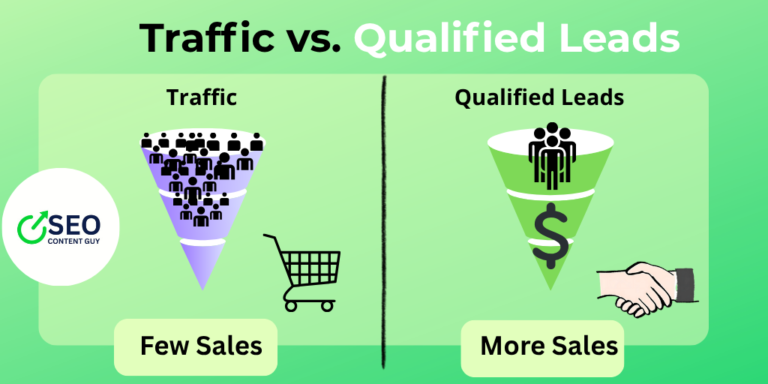
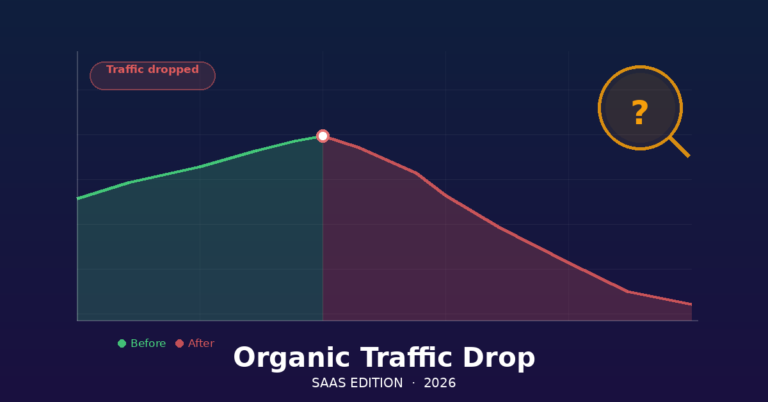
This is why so many SaaS companies look at their organic traffic reports and feel confused. While traffic looks decent, leads are thin. Guess what? That gap between traffic and pipeline is a signal that your SEO targets information intent, not buying intent.
Interestingly, product-led SEO closes that gap because the pages you build target people who are searching for what your product does, not just what your product is about.
Note there is a big difference between the two.
For instance, someone searching “how to automate expense reports” is gathering knowledge. On the other hand, someone searching “expense report automation software for finance teams” is shopping. And the good thing about product-led SEO is that it targets shoppers.
Ultimately, it also reduces customer acquisition cost over time. That said, while high CAC is often a paid channel problem, it is also a targeting problem. The point is that when your SEO pages attract the wrong audience, you spend more on converting them or churning them early.
Product-led pages attract people who need exactly what you sell.
The Core Building Blocks of Product-Led SEO for SaaS
Product-led SEO is not one tactic. It is a system made of several page types that work together. Now, here are the main ones:
Feature Pages
Every core feature in your product deserves its own SEO-optimized landing page. This is not a help article, but a real landing page with search intent in mind.
Let’s look at this analogy. If your SaaS has a feature called “recurring billing automation,” you can build a page called something like “/features/recurring-billing-automation” and then optimize it for every variation of that search.
Of course, that would include what the feature does, who it helps, how it works, and a clear call to action.
Take feature pages, for example. They rank because they match exact product-level searches. Not only that. Feature pages convert because visitors already understand they want this feature, and now they just need to choose a tool.
Integration Pages
This is one of the highest-leverage page types in SaaS SEO. If your product integrates with other tools, every integration deserves its own page.
This is important because searches like “Slack integration with project management software” or “QuickBooks sync for invoicing tools” happen thousands of times every month across the SaaS landscape.
Now, imagine that you have those integrations and a page for them. With an asset like this, you can rank and capture buyers who are specifically searching for what you offer.
Zapier is a typical brand that has demonstrated this. They built their entire content moat on this, and have pages for virtually every app-to-app combination their product supports.
You know what? You can call this product-led SEO at scale.
Use Case Pages
Use case pages target specific buyer segments or scenarios. Instead of speaking generally to “teams,” you build pages for “marketing teams,” “remote agencies,” “ecommerce brands,” and so on.
These pages work well because B2B buyers often search with context. The truth? They are not looking for generic software. Rather, they want software that solves their specific problem in their specific situation.
And this is where a use case page comes in handy. It tells them, clearly and directly, that your product is built for them.
The bottom line is that use case pages also help with on-page content conversion. This is because visitors engage more and convert better when they land on a page that speaks directly to their role and pain point than on general landing pages.
Comparison and Alternative Pages
Your buyers compare you to competitors before they buy. In other words, they search for “Tool A vs Tool B” or “best alternatives to [competitor].” And guess what? If you do not own those pages, your competitors or review sites will.
The truth about comparison pages is that they serve late-stage buyers who are almost ready to decide. Often, this category of prospects has high purchase intent. That’s why a well-built comparison page that is honest, specific, and optimized can bring in leads who are already sold on the category and just need to pick a winner.
Template and Tool Pages
If your product helps users do something repeatable, you can offer a free version of that thing. This could be a free invoice template. A free project brief generator or a free social media calendar.
Now here’s the interesting thing about these pages: they attract top-of-funnel searchers, but with a twist. How? This is because the people searching for your templates are also likely buyers.
Take, for example, someone searching for a “free customer onboarding checklist” is probably managing onboarding for a team. And if your SaaS helps with onboarding, most likely that is your buyer.
What’s more? Free tools and templates also earn backlinks naturally. And this strengthens your entire domain and helps all your other pages rank.
How to Build a Product-Led SEO Strategy Step by Step
Before you build any of these pages discussed above, you need a plan. This is essential because random page creation will not generate a pipeline. A structured approach will.
A good starting point is to map your product. This would mean listing every feature, integration, and use case your product supports. Usually, this is your raw material.
Once you’ve done that, the next line of action is to carry out keyword research focused on revenue intent, not just search volume. The idea is to find queries where the person searching is either actively comparing tools, looking for a specific integration, or trying to solve a problem your product fixes.
In doing this, you should pay attention to low-volume, high-intent keywords. And the reason is simple: this category of keywords outperforms high-volume, low-intent ones every time in B2B SaaS.
What next?
At this point, you need to prioritize your page types. For most SaaS companies, integration pages and feature pages are the fastest wins.
While you can start there, it’s pertinent to build use case pages as your next line of action. However, note that comparison pages often need more authority to rank well. This is why it’s advisable to save those for when your domain has more strength.
Now here’s a critical point to note: when you build the pages, treat them like landing pages, not blog posts. Every page needs a clear headline, a benefit-oriented description, proof (screenshots, testimonials, case studies), and a single conversion action. As a rule, you shouldn’t clutter them with navigation to nowhere.
Finally, you should ensure your technical SEO foundation supports the pages you build. They include ticking subjects such as crawlability, site speed, structured data, and clean URL architecture. All of this affects whether Google indexes and ranks your product pages. A fast, well-structured site makes your content work harder.
This is the high-level map. If you want the complete execution playbook — including how to sequence page types, brief writers, and drive free trial and freemium signups without a sales pitch — see our step-by-step guide to building a product-led SEO strategy for B2B SaaS.
Common Mistakes SaaS Companies Make With Product-Led SEO
Even companies that understand the concept make costly errors when they try to execute.
The most common mistake is building pages for features nobody searches for. Your product team named a feature “Smart Flows.” Your buyers search for “workflow automation.” In practice, this doesn’t add to your SEO efforts and investment.
And that’s why you must build the page around what buyers call it, not what your internal team calls it.
Another mistake is creating thin pages with no real content. Imagine a page that says “Our Slack integration lets you sync data” and nothing else. The truth is that such a page will not rank.
That’s because Google wants pages that fully answer the searcher’s question. So, a rule of thumb for building an integration page, for example, would be to explain what the integration does, how it works, what problems it solves, and what the setup looks like.
Unfortunately, many SaaS teams also build these pages and then forget to build internal links. But here’s the thing: product pages only reach their ranking potential when other pages on your site link to them.
So the bottom line is that your blog, help docs, and feature pages should all link to each other where relevant. This is to say that internal linking mistakes are one of the top silent killers of SaaS SEO.
Above all, you must avoid treating this as a one-time project. Product-led SEO scales with your product. You know what? Every new feature is a new ranking opportunity. In the same way, every new integration is a new page. So it is essential to make it part of your product launch checklist.
The Easiest Way to Start Product-Led SEO (3 Steps)
If executing a product-led SEO feels overwhelming for your SaaS business, here are three practical steps to help out:
Step 1: Write down what your product actually does.
This is not about your features, but real problems it fixes. For instance, writing “Helps remote teams track tasks without endless Slack messages” is better than “task management software.” That’s the difference between stating your product’s features and the real problem(s) it solves in real time.
Step 2: Find out how people search for those problems.
Once you outline the problems your product solves, the next thing is to research if people are actually searching for it.
You can do this by typing your problem into Google. Then look at the autocomplete. Those are real searches from real people who want what you sell.
Step 3: Build a page where your product IS the answer.
Don’t just mention your product at the bottom of a blog post. No, instead make it the solution in the middle of the page. A practical way to do this is to show your product solving the problem, step by step.
That’s the whole foundation. So the idea is to build those pages first. Everything else — comparison pages, template hubs, programmatic SEO — comes after you’ve nailed this.
How Product-Led SEO Fits Into Your Broader SEO Stack
Product-led SEO does not replace content SEO. Instead, it works alongside it.
The implication of that is that your content strategy for SaaS should cover the full funnel. As you probably know, top-of-funnel content builds awareness and earns backlinks, whereas middle-of-funnel content nurtures consideration.
And as for product-led pages, they convert. Ultimately, these pages should work together to help achieve your business goal.
That being said, this approach helps you know what each channel is doing, especially when you are deciding where to spend your resources.
Now here’s something to think about: SEO versus PPC is a classic debate in SaaS marketing. On one hand, paid channels generate leads fast but go quiet when you stop paying. On the other hand, product-led SEO compounds. Essentially, every page you build keeps ranking and converting long after you publish it.
This may sound too good to be true, so you might wonder whether to do it yourself or hire an SEO agency. The right choice depends on your team’s time and skills.
Before you decide, learn the pros and cons of using an SEO agency or building an in-house SEO team. Read our complete breakdown of SaaS SEO agency vs. in-house.
Should a SaaS Company Invest in SEO or Product-Led Growth First?
The answer is do both — but start with SEO.
That’s the most practical yet candid response you can get.
This is because PLG needs people to discover your product on their own. And SEO is how they discover it. So here’s the bottom line: If nobody finds you, PLG has nothing to work with.
You can think of it this way: SEO fills the top of the funnel, and then PLG converts everyone inside it.
Yet, while you need both, you can’t skip the first step. The point is that when you rank for the exact problems your product solves, you can be sure of this: the people who arrive already want what you have.
As a result, your product converts them faster because there’s no convincing to do. They just needed to find you.
What Good Results Look Like
Product-led SEO is not an overnight win. Most SaaS companies see meaningful traction in three to six months, with compounding gains after that.
But the question is, how do you know it is working?
Of course, you know when you see organic traffic coming from keyword clusters that directly name your features, integrations, or use cases.
Also, you will see demo requests and trial signups where the user came through a product page. And yes, you will see organic traffic that does not drop every time you publish less blog content, because your product pages keep ranking regardless of your content calendar.
Ultimately, product-led SEO for SaaS is a bet on your product’s value. The bottom line? If your product genuinely solves real problems for real buyers, then building pages around those problems is pertinent. This way, you will find people who are already looking for the solution you sell.
You know what? That is the best kind of SEO. Not traffic for traffic’s sake. But the pipeline from people who already want what you have.
Frequently Asked Questions About Product-Led SEO for SaaS
What is product-led SEO?
Product-led SEO means you use your product’s features, use cases, and integrations to rank on Google— instead of writing generic blog posts that have nothing to do with what you sell.
How is product-led SEO different from traditional SEO?
Traditional SEO starts with keywords. On the other hand, product-led SEO starts with your product. So the key difference is that one attracts random traffic, and the other attracts people who are one step away from signing up.
Is product-led SEO right for B2B SaaS?
Yes — especially B2B SaaS. And this is because B2B buyers research for weeks before they buy. And the good news is that product-led SEO puts you in front of them during that research. This way, you’re already the trusted option when they’re ready.
Should a SaaS company invest in SEO or product-led growth first?
Start with SEO. And the reason is that PLG needs traffic to work. SEO brings traffic, and once people arrive and try your product, PLG converts them. So the bottom line is that you need both — but SEO comes first.
What makes product-led SEO important for early-stage SaaS?
The reality is that early-stage SaaS companies have no ad budget and no brand name. Despite this, product-led SEO lets you compete with bigger companies by showing up for specific, high-intent searches — the ones where your product is the exact answer.
Product-led SEO works best when it sits inside a coherent overall SEO system. If you want to see how we build that system for B2B SaaS companies, our SaaS SEO service page is a good starting point.
Want the full picture on how to build SEO that drives revenue for your SaaS business? Read the complete guide: SEO for B2B SaaS: The Complete Guide to Driving Pipeline (Not Just Traffic).