
Chances are, you’ve recently searched for this on Google or Bing: What is the difference between B2B SEO and B2C SEO?
If you have ever wondered why a blog that works perfectly for an online store fails for a B2B company, you are already asking the right question.
B2B and B2C SEO may use the same search engines, but they play very different games. And yes, the rules, the pace, the goals, and even the audience mindset change everything.
Here’s a simple way to think about the difference between the two. B2C SEO is like street retail, fast, direct, and built around quick decisions. Conversely, B2B SEO can be likened to enterprise sales, with longer cycles and more people involved before a choice is made.
Although both involve people, the way people think, search, and decide is not the same.
So then:
What is the core difference between B2B and B2C SEO?
The biggest difference between B2B and B2C SEO is not keywords, tools, or algorithms. It is people.
To start with, B2C SEO targets individuals buying for themselves. On the other hand, B2B SEO targets professionals who purchase (mostly software) on behalf of a business organization.
It’s that simple. That explains almost everything else.
For example, when someone shops for shoes, food, skincare, or a phone case, the decision is personal, emotional, and usually swift. This is different when someone searches for CRM software, cloud security, logistics platforms, or accounting systems; in this case, the decision to buy affects jobs, budgets, teams, and long-term outcomes.
Thus, in B2C, the buyer asks, “Do I like this?”
But in B2B, the buyer asks, “Will this work for my company, and will I look smart recommending it?”
This difference often shapes audience behavior, search intent, content strategy, and conversion goals. In short, you can examine the distinction between SEO for B2B and B2C SEO by considering these parameters.
How B2B and B2C Audiences Search Differently
B2B audiences behave very differently on search engines like Google and Bing than B2C audiences do. B2C searches are often short, emotional, immediate, and product-focused.
Here are typical examples of searches that B2C customers may make on the search engine bar:
- “best wireless earbuds”
- “cheap flights to London”
- “skincare for oily skin”
- “pizza near me”
When you look at those queries, it is clear that B2C searchers usually want quick and immediate answers. They compare prices, reviews, images, and availability. And if they like what they see, they can make a purchase. Thus, the entire journey can happen in minutes.
That is not how B2B audiences search. Their behavior and the queries they use on the search engines look different. Often, they are longer, focused on problems, driven by research, and spread out over weeks or even months.
Typical examples of searches B2B buyers make include:
- “How to improve supply chain visibility.”
- “crm software for mid-sized manufacturing companies”
- “iso 27001 compliance requirements for SaaS”
- “alternatives to Salesforce for B2B sales teams”
As you can see, these searches are not about buying right away. Instead, they focus on learning, checking options, and reducing risk before a decision is made.
As of 2025, Gartner research confirms that most B2B buyers prefer to research independently before speaking with a vendor representative. Since 2022, buyers have increasingly expected self-service options as digital-first purchasing has become the default rather than the exception.
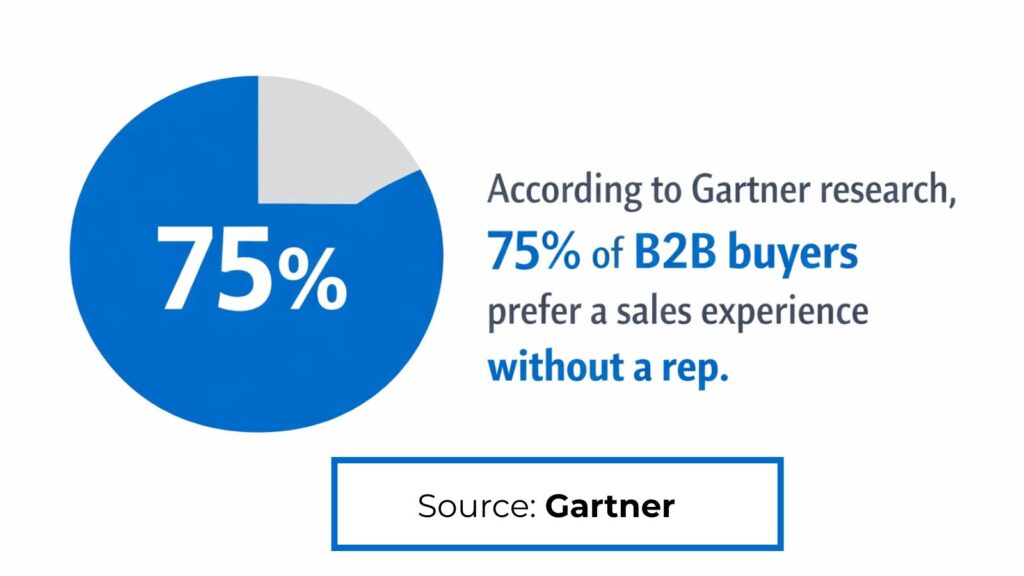
So your SEO content often reaches them well before sales ever get involved.
Why B2B Keyword Intent Differs
This is where many B2B SEO strategies fall flat. Many B2B brands make the mistake of using B2C keyword logic and then wonder why traffic does not convert.
In B2C, keywords often point directly to a product, like “buy running shoes,” “iPhone 15 price,” or “best air fryer under $100.” With this in mind, high-volume keywords may produce positive results (to some extent) in B2C because each visit has a good chance of turning into a sale.
But it’s different in B2B, as high-volume keywords are often misleading.
Take the keyword “CRM software.”
It has a huge search volume, but who is actually searching for it?
The fact is that searchers could be:
- students doing research,
- small businesses with no budget,
- enterprise buyers in the early discovery stage, or
- People who are comparing dozens of tools.
With that in mind, only a fraction are ready to buy, and even fewer are the right fit.
That’s why B2B SEO works better when you target intent depth rather than just volume.
Here are practical examples of high-intent B2B keywords:
- “CRM for a 50-person sales team”
- “HubSpot vs Salesforce for B2B SaaS”
- “SOC 2 compliance checklist for startups”
- “ERP software for manufacturing companies”
These keywords may have lower search volume, but they deliver much higher business value. In other words, content works best when it matches intent rather than just chasing traffic. This principle is even more important in B2B. You can see our guide to B2B keyword research for a deeper framework on how to research and prioritize these keywords.
B2B vs B2C Content: Trust Versus Speed
Content is where the difference between B2B and B2C SEO becomes obvious. In a B2C content approach, content focuses on speed, simplicity, visual appeal, and emotional triggers.
Typical examples of B2B content include:
- Listicles like “Top 10 headphones.”
- Short reviews
- Comparison tables
- Influencer-style content
- Strong calls to action
Often, content like this aims to remove obstacles and guide the user toward a purchase as quickly as possible. On the contrary, the content approach for B2B is different. Essentially, it focuses on depth, credibility, education, and helping buyers reduce risk.
Typical examples of that are suitable for B2B include:
- Detailed guides
- Whitepapers
- Case studies
- Industry benchmarks
- Thought leadership articles
The truth is that B2B buyers do not want hype. They want proof.
The 2024 Demand Gen Report B2B Buyer Survey reinforces this pattern. Buyers consistently prefer vendors who understand their specific business challenges over those who rely on generic feature comparisons.
This preference has grown stronger as AI-generated content has increased across B2B publishing, which makes genuine specificity and demonstrated expertise more valuable, not less.
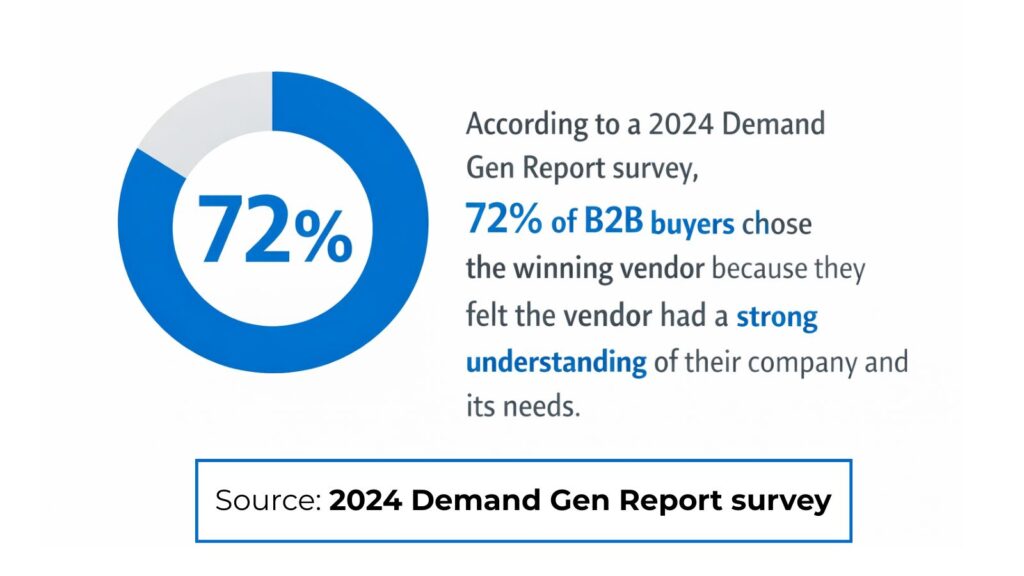
That means beyond just the supply of information, your SEO content must reflect empathy, experience, and expertise.
A relatable way to think about this is that a B2B blog post is not trying to impress Google. Instead, it is trying to reassure a cautious professional who does not want to make a bad decision. It’s that simple.
Checkout Goals Versus Conversion Goals
One of the biggest misunderstandings in B2B SEO is how conversions are tracked.
But in B2C, it is easy to think of conversions as purchases, adding items to a cart, subscriptions, or app installs. And often SEO success directly links to revenue.
In contrast, B2B conversions are more gradual and occur in stages, such as newsletter signups, ebook downloads, webinar registrations, demo requests, and contact form submissions.
Now, these are not sales. But they are signals you should pay attention to.
In essence, B2B SEO feeds the sales funnel, not the checkout page.
So when someone asks, “Is B2B SEO harder than B2C?” The honest answer is yes, because success is harder to measure and slower to see.
Now that we’ve looked at the differences, the big question is:
How do these differences shape B2B SEO planning and execution?
Since SEO for B2B isn’t the same as B2C SEO in practice, B2B businesses should approach SEO with those differences in mind.
Take keyword research, for example. For a B2B company, it often begins with understanding industry language, job titles, business problems, and buying stages.
And that’s why, instead of asking, “What keywords get traffic?” B2B teams should ask:
- “What questions do our best customers ask before buying?”
- “What problems keep them awake at night?”
- “What objections slow down deals?”
More often than not, the best keywords of B2B brands come directly from sales calls, support tickets, customer interviews, or CRM notes. This way, they can create content that matches the meaning, content, and intent of their prospective buyers.
When that happens, you can see SEO semantics in action. And that’s because content does more than just match words.
With that in mind, another important area to consider is:
Content Creation for B2B
For a B2B company, content should align with the buyer’s journey. First, at the awareness stage, content should educate prospective customers about the problem. And then, at the consideration stage, the content should compare solutions.
Finally, at the decision stage, B2B content should provide proof and validation to help buyers make a choice. When the evidence is clear and convincing, the next step is usually the purchase.
For example, an awareness search such as “Why data silos hurt B2B operations” identifies problems. And then a consideration query, “Centralized data platforms vs point solutions,” compares solutions.
Finally, a decision query like “How Company X reduced costs by 30% using our platform” reflects the truth that the prospective customer is looking for proof.
Of course, the content moves from educating to helping buyers evaluate and validate options. This type of content often guides prospective B2B customers toward making a purchase decision. In other words, each piece builds on the last and guides the buyer forward.
Link building looks very different in B2B than it does in B2C.
In B2C, links often come from blogs, influencers, deal sites, and lifestyle publications. The goal is broad reach and visibility.
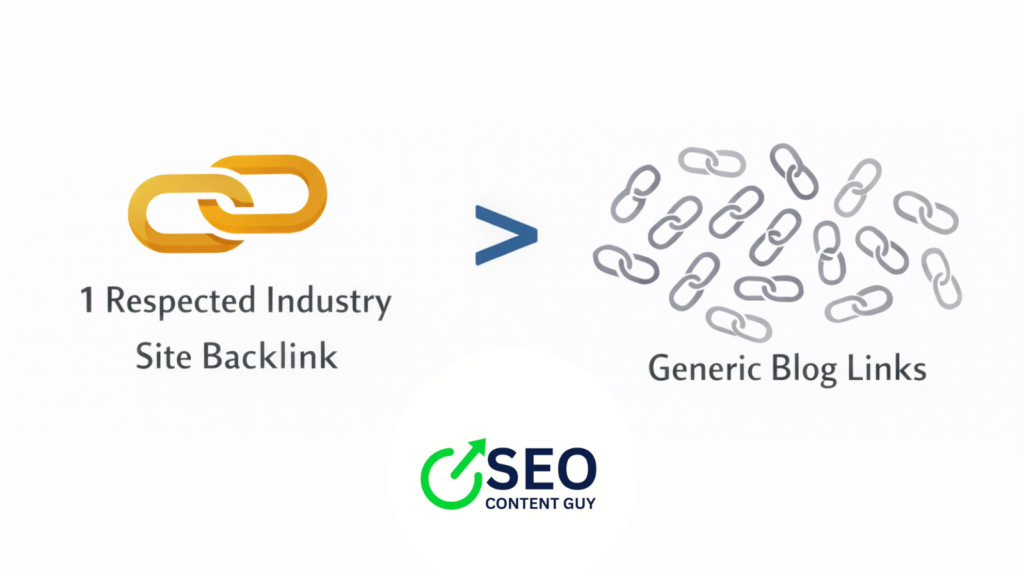
But B2B link building is more focused. Usually, it centers on industry publications, research reports, partnerships, expert contributions, and original data. Here, credibility matters more than volume.
And that’s because a quality and relevant backlink from a respected industry site can carry more weight than dozens of generic blog links.
Real examples of B2B SEO done right
Now that you understand how B2B SEO differs from B2C, it is natural to wonder how this works in the real world. Of course, several large companies (including SaaS companies) have used SEO as a marketing channel and continue to get it right.
Here are typical examples you may have come across a lot:
1. HubSpot
As a SaaS company, HubSpot did not grow by only ranking for “marketing software.”
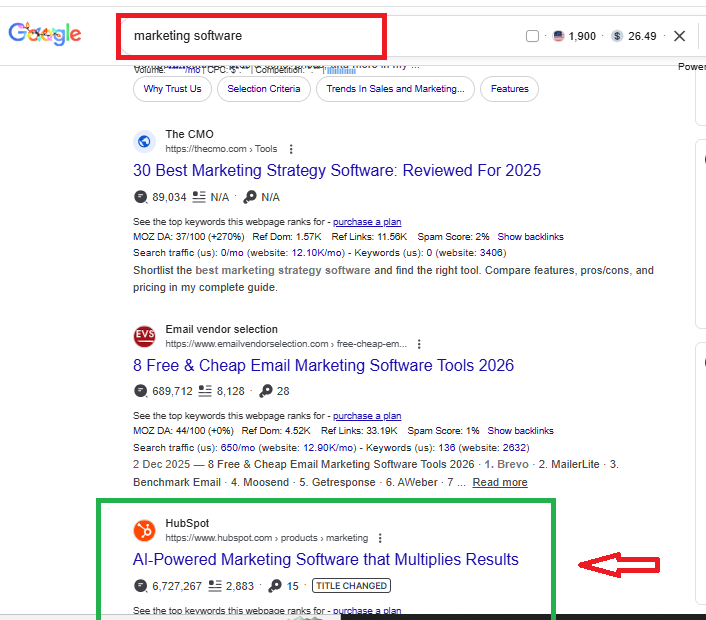
Instead, they built massive educational content around:
- Inbound marketing
- Lead generation
- CRM strategy
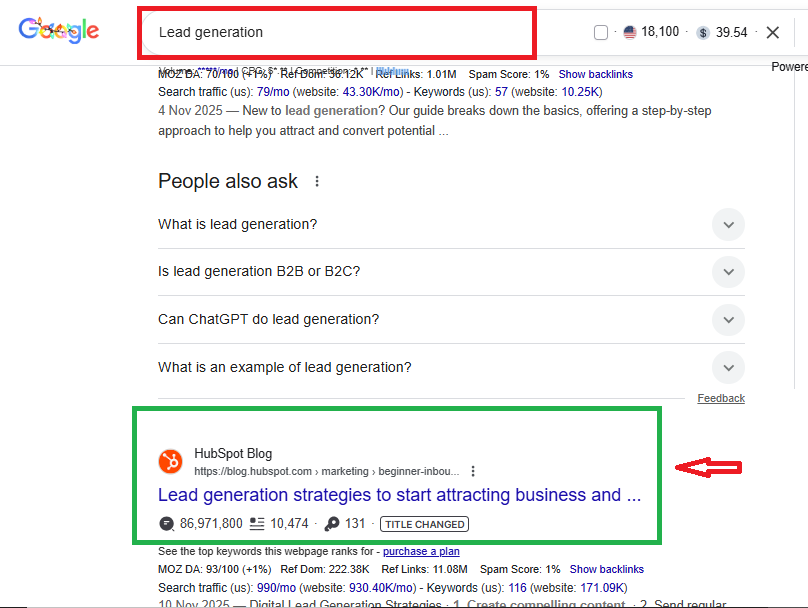
The key point is that their blog answers thousands of long-tail B2B questions, even when readers are not ready to buy. And by the time someone finally needs a CRM, HubSpot already feels familiar and trustworthy.
2. Ahrefs
Ahrefs is another strong example. Their SEO strategy focuses on education first, even though they sell SEO software…not selling.
And because of this, they rank for keywords like:
- “backlink analysis”
- “keyword research”
- “seo basics for beginners”
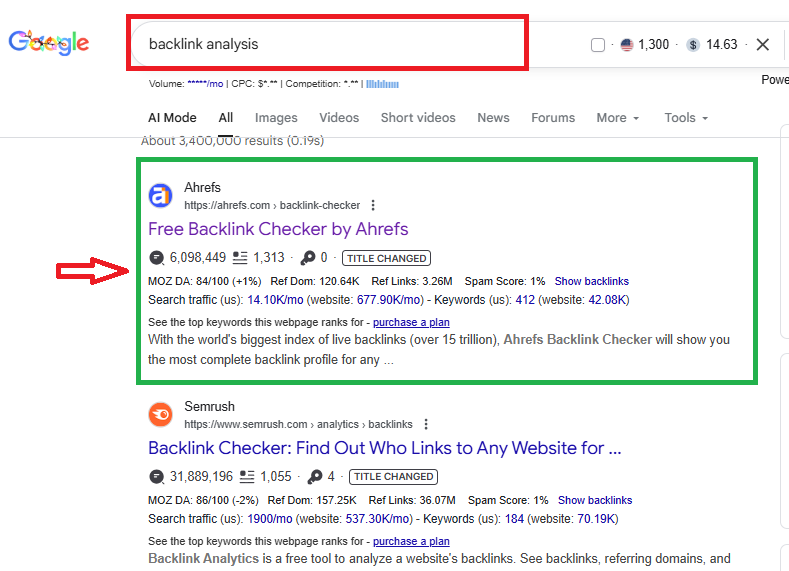
Ahrefs content often attracts professionals learning SEO. And in the end, many of them later become customers.
You know what? That is B2B SEO at its best. So the mantra is “Teach first. Sell later.”
3: Salesforce
Finally, Salesforce is another SaaS company that has used B2B SEO well (and continues to do so). They invest heavily in thought leadership to build authority and trust over time.
Over time, they’ve created content around:
- Sales operations
- Customer experience
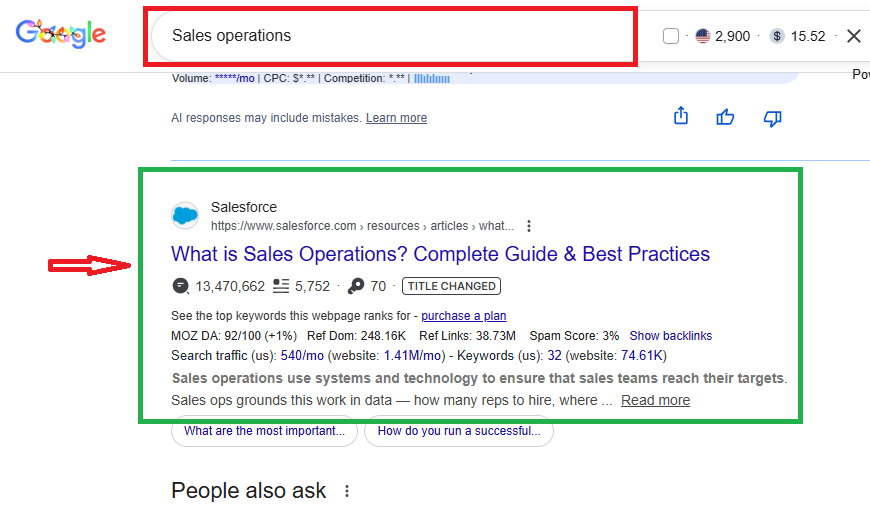
It is worth noting that much of this content doesn’t mention pricing or demos. Instead, it builds authority with executives, who make real decisions.
How AI Search Is Changing B2B vs B2C SEO Differently in 2026
The rise of AI Overviews in Google search results is affecting B2B and B2C SEO in very different ways. And it’s critical to understand the difference if you are running a B2B program.
The point is that AI Overviews are significantly collapsing click-through rates on informational queries for B2C searches. For instance, a search for ‘best moisturizer for dry skin’ now often produces an AI-generated summary that answers the question without requiring a click.
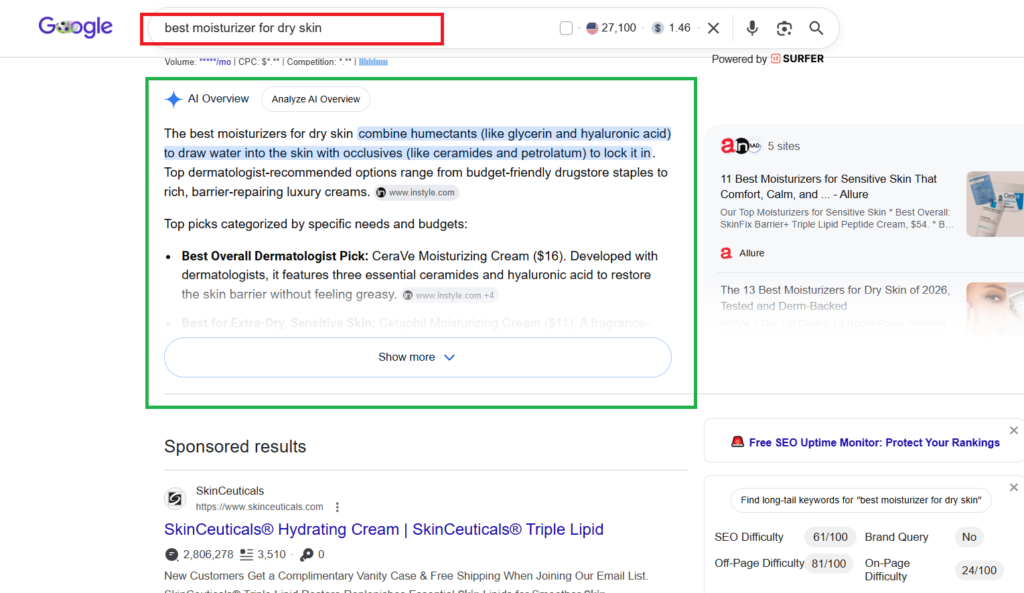
The thing is, the dynamic is more nuanced for B2B searches because AI Overviews appear far less frequently for high-intent, purchase-oriented queries.
In practice, searches like ‘best CRM for enterprise B2B sales’ or ‘HubSpot vs Salesforce for mid-market’ still produce traditional blue-link results because the search intent is comparative and transactional, not purely informational.
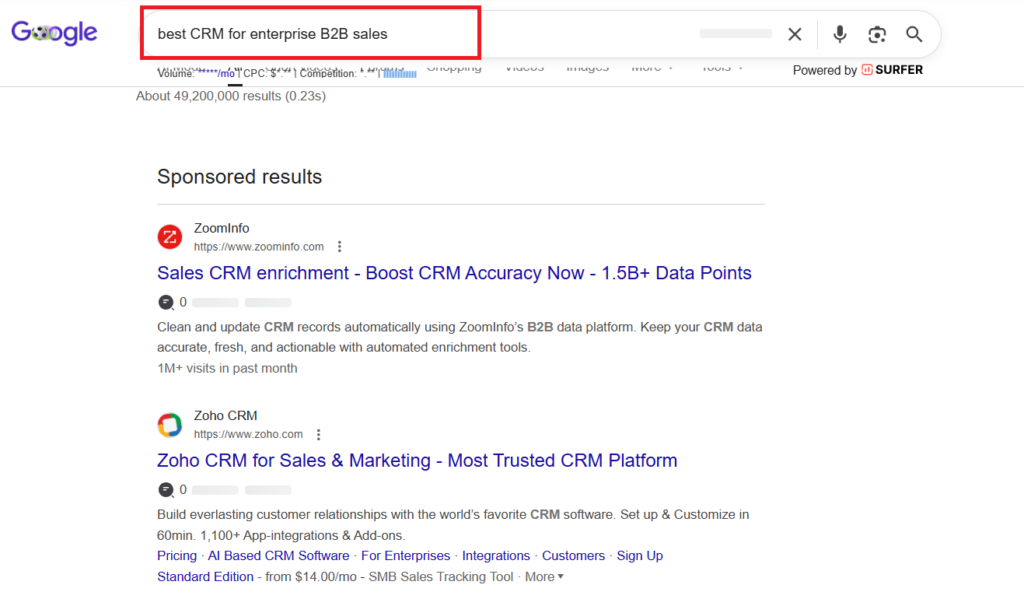
| Practical implication: informational and awareness-stage content is increasingly absorbed by AI Overviews, which reduce click-through even when you rank. In contrast, high-intent, comparison, and decision-stage content is relatively protected — at least for now. |
What ‘AI-Resistant’ B2B Content Looks Like
Content that is difficult to compress into a three-sentence AI summary shares a few characteristics:
- Proprietary or first-party data. AI cannot summarize data that does not already exist in its training set.
- Opinionated positions that require context. A statement like this: ‘Why we stopped recommending this common SEO tactic after seeing what happened to three of our clients’ is harder to reduce to a generic answer.
- Specific audience and use case. A statement such as ‘B2B SaaS SEO for companies with a 9-month average sales cycle’ is more defensible than ‘B2B SEO tips’ because AI Overviews tend to answer general questions, not highly specific ones.
Note this is a structural difference between B2B and B2C content strategy that will likely grow in importance over the next two to three years.
The Role of E-E-A-T in B2B vs B2C SEO
Google’s quality evaluation framework — Experience, Expertise, Authoritativeness, and Trustworthiness — applies to all content. But then, it matters more in B2B than in almost any other context.
And that’s because B2B buyers are making high-stakes decisions with real organizational consequences. In reality, they are evaluating vendors whose products might cost $50,000 a year and affect their entire operations team.
Hence, they actively look for proof that someone with real experience wrote the content they are reading.
What Strong E-E-A-T Signals Look Like in B2B Content
- Experience: Include specific case studies, client results, named examples, and first-person accounts. ‘In our experience working with B2B SaaS companies over the past three years’ is stronger than ‘many experts believe.’
- Expertise: Author bios should include verifiable credentials — LinkedIn profiles, named companies worked with, specific achievements.
- Authoritativeness: External references to your content, mentions in industry publications, and links from recognized B2B media signal authority. These are built over time and cannot be faked.
- Trustworthiness: Clear ownership, consistent authorship, accurate statistics with proper citations, and transparent business information all contribute to trust signals that Google’s quality evaluators look for.
For B2B SEO, especially in YMYL-adjacent categories like finance, legal tech, and healthcare software, you must demonstrate strong E-E-A-T signals to achieve and sustain high search rankings.
Adjusting your SEO strategy to fit a B2B sales funnel
If you are already doing SEO and want it to work better for your B2B brand, here are practical steps to make the right adjustments.
Step 1: Redefine success
A good start is to stop obsessing over how much traffic you pulled in and instead begin to ask a better question: Did the right people actually engage?
Of course, in practice, this means checking signals that reveal real interest, such as:
- how long they stayed on the page,
- how far they scrolled,
- which content helped move them toward a lead, and
- how that content supported conversions along the way?
Step 2: Build topic clusters, not random posts
B2B SEO works best when you go deep. And that’s why it’s critical to start with pillar pages on your core topics, and then support them with detailed subpages.
For example, you could create a pillar page titled “B2B Demand Generation” and support it with cluster pages on SEO, paid search, content, email marketing, and attribution. This way, you help search engines recognize your expertise and make it simple for users to navigate and explore your content. See our complete guide to B2B content clusters for how to structure this in practice.
Step 3: Write for multiple decision-makers
This entails writing for all the decision-makers involved in a B2B purchase. Of course, that includes users, managers, executives, finance, and IT teams.
That’s to say, your content should address a range of concerns, such as efficiency, ROI, security, scalability, and risk.
For example, a CRM product page could show how it saves users time, delivers measurable ROI for managers, ensures data security for IT, and scales easily for growing companies. In other words, one product can be seen in many ways. And yes, your content must speak to every perspective.
Step 4: Align SEO with sales
You can align SEO with your sales team by checking in regularly and asking questions such as:
- Which questions slow down deals?
- What objections appear late in the process?
- What comparisons do prospects look for?
Then, create SEO content that answers these questions before sales ever have to get involved.
Answering common B2C versus B2B questions
Here are some frequently asked questions and clear answers.
Is B2C better than B2B?
No. They are different. B2C moves faster. But B2B builds deeper relationships.
Is B2B more difficult than B2C?
Yes, in most cases. And that’s because it takes longer, requires more trust, and involves more stakeholders.
Is B2B more stable than B2C?
Often yes. B2B contracts are longer, budgets are planned, and churn is lower when value is clear.
Can you do both B2B and B2C SEO?
Yes, but they need separate strategies, content, and success metrics.
Why is the B2B market bigger?
The B2B market is larger because businesses buy repeatedly, at scale, and for long-term needs.
Who is the target audience?
B2C targets individuals, while B2B targets roles, teams, and organizations.
Final thought
B2B SEO is not about tricking search engines or chasing rankings. It is about understanding people in serious decision-making moments and showing up with clarity, honesty, and value.
If you treat SEO like a relationship instead of a transaction, it works. It compounds. And over time, it becomes one of the strongest growth engines your business can have.
That is the real difference between B2B and B2C SEO. Understanding these differences is the foundation, while applying them in a real SEO system is the harder part.
If you’re ready to put these differences into practice, our complete B2B SEO strategy playbook walks through the full step-by-step process. And if you need help with execution, our B2B SEO services support B2B and SaaS companies as they work through this challenge.